

Drug driving overtakes drink driving
WITH DRUG-driving offences now surpassing drink-driving endorsements for the first time, Nicholas Lyes explores the implications for business fleets and why employers need to be prepared.

Drink driving has long been one of the most well understood risks on the UK’s roads, with decades of tougher enforcement, roadside testing, public awareness campaigns and stricter penalties helping to shift attitudes and behaviours. In 1979, more than a quarter of road deaths involved at least one driver or rider over the drink-drive limit. By 2023, that figure had fallen to 16%.
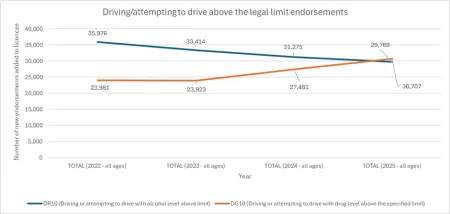
While drink driving remains a serious issue, DVLA data obtained and analysed by IAM RoadSmart shows that, for the first time, the number of drivers receiving endorsements on their licence for drug driving has overtaken those receiving the corresponding drink driving offence.
A changing road safety landscape
One of the key differences between drink driving and drug driving is public perception. Drink driving has been the focus of sustained public messaging for decades, helping to create a strong social stigma around getting behind the wheel after consuming alcohol. Drug driving, however, has not received the same level of public attention, despite also being illegal and extremely dangerous.
Part of the challenge is that many drivers do not fully understand how different substances can affect their ability to drive safely. The Department for Transport has consistently found that drugs can significantly impair driving ability. Cannabis, for example, can affect reaction times, concentration and judgement, impacting a driver’s ability to respond safely to hazards and changing road conditions. Equally, stimulant drugs such as cocaine can increase risk-taking behaviour, overconfidence and aggression behind the wheel, all of which are linked to dangerous driving behaviours.
However, the issue is not limited to illegal substances alone. In 2015, the Department for Transport noted several prescription drugs that motorists would be breaking the law by using if it impacts on ability to drive, while some over-the-counter remedies can also affect cognitive awareness.
As drug use has become more prevalent in younger age groups, road safety organisations and police forces are increasingly concerned that drug driving does not carry the same level of stigma as drink driving. Recent research from University College London, for example, found that almost half of 23-year-olds surveyed had used cannabis, while the DVLA’s recent data analysed by IAM RoadSmart shows that drivers aged 17-24 account for almost a fifth (18%) of all drug driving offences*.
Why businesses should take notice
For employers managing fleets or employees who regularly drive for work, the rise in drug driving presents both a safety and an operational concern. Fleet drivers impaired by drugs such as cannabis may experience slower reaction times, reduced coordination and impaired judgement, increasing the likelihood of collisions. Research by IAM RoadSmart showed that class A drug use tended to be more prevalent among high mileage drivers. This possibly indicates cocaine use for those driving at night or during anti-social hours.
Businesses also face legal, financial and reputational risks where employees are found to be driving under the influence of drugs. A company vehicle involved in an incident, stopped by police or seen being driven erratically can quickly damage public trust. A conviction for drug driving can result in a minimum 12-month driving ban, an unlimited fine and up to six months in prison.
Employers also have broader responsibilities under the Health and Safety at Work Act to ensure, so far as reasonably practicable, the health, safety and welfare of employees, and anyone affected by their work activities.
Are current fleet policies fit for purpose?
For many businesses, drug driving policies currently sit within broader substance misuse guidance, without specific reference to driving for work.
Unlike alcohol, where limits and public understanding are relatively clear, drug impairment can be more difficult to identify. Some drivers may not realise prescription medication can impair their driving ability.
Businesses with employees undertaking high mileage journeys, shift work or regular night driving may face greater risks linked to fatigue, reduced concentration and impaired decision making. Fleet managers should ensure drivers are properly rested, understand the risks associated with driving while impaired, and feel comfortable reporting when they are not fit to drive.
Police enforcement remains an important part of tackling drug driving, with officers now using roadside testing kits, field impairment assessments and blood or urine analysis. However, enforcement alone is unlikely to solve the issue, so employers must recognise the role they have to play in raising awareness of the dangers.
What can businesses do?
Businesses should take proactive steps to ensure their policies and driver guidance remain fit for purpose. Reviewing driver policies to ensure drug driving is clearly addressed is an important starting point. Clear expectations, open communication and consistent policies can help reinforce the message that driving while impaired is never acceptable.
Businesses may also wish to introduce additional driver education or refresher training to ensure employees understand the safety and legal consequences of drug driving as well as the psychological impacts of using different types of illicit and prescription drugs. Encouraging staff to raise concerns where they believe a colleague may be unfit to drive can also help identify risks early. Businesses might also wish to look at seasonal cycles where drug misuse may be more frequent.
Taking steps now to strengthen policies and educate drivers can help organisations reduce liability and support safer roads.
Nicholas Lyes is policy and external communications director at IAM RoadSmart. For more information, visit www.iamroadsmart.com


HSM Newsletter
HSM publishes a weekly eNewsletter, delivering a carefully chosen selection of the latest stories straight to your inbox.
Subscribe here