
How to specify emergency safety showers for industrial projects
CHOOSE THE right emergency safety shower for your site, application and risk profile with expert guidance from Hughes.

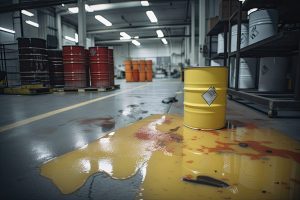
Emergency safety showers and eyewash stations are essential safety equipment in industrial environments where workers may be exposed to hazardous chemicals or other harmful substances. From chemical handling and manufacturing to maintenance, cleaning and loading operations, having the right emergency decontamination equipment in the right location can make a critical difference when an incident occurs.
Specifying the correct solution involves more than selecting a product. Project teams must assess the exposure risks, applicable standards, water supply, installation environment, accessibility and ongoing maintenance requirements to ensure the equipment is suitable for its intended application.
Start with a risk assessment
The first step is to identify the substances being handled, where exposure could occur and which workers may be affected. Consider whether the risk involves the body, eyes or face, and whether a full-body emergency shower, eyewash station or combination unit is required.
Applications may include chemical storage and transfer areas, process plants, laboratories, battery charging facilities, loading bays and maintenance zones. The findings of the risk assessment should inform both equipment selection and positioning.
Consider the relevant standards
Emergency shower specifications should be guided by the standards applicable to the project. BS EN 15154 is an important reference for emergency safety showers and eyewash equipment in the UK, while ANSI Z358.1 is frequently referenced on international projects.
The appropriate standard depends on the equipment type and application. Requirements relating to water delivery, activation, spray performance, installation, signage, testing and maintenance should be considered early in the design process.
Match the equipment to the environment
The installation location and available infrastructure will influence the most suitable solution.
-
Plumbed-in safety showers: Ideal for permanent installations with a suitable mains water supply, such as fixed process areas and chemical handling zones.
-
Tank-fed safety showers: Suitable for remote or exposed locations where mains water or reliable water pressure may be unavailable.
-
Mobile safety showers: Provide flexibility for temporary works, shutdowns, turnarounds and changing work areas.
-
Emergency eyewash and combination units: Help address risks involving the eyes and face, or simultaneous exposure to the body and eyes.
-
Temperature-controlled safety showers: May be required where freezing conditions or excessive heat could affect water temperature or equipment performance.
Water pressure, flow rate, available volume and temperature should all be assessed against the project requirements. Outdoor installations may also require frost protection, insulation, heating or cooling, while corrosive or contaminated environments may influence material selection.
Plan location and accessibility
Emergency equipment must be easy to identify, reach and activate. Position showers close to potential exposure hazards, with clear, unobstructed access and appropriate signage. Consider site traffic, machinery, temporary storage and future layout changes to ensure access remains available throughout the equipment’s working life.
Drainage, installation space and maintenance access should also be addressed during project planning, rather than left until installation.
Plan for testing and maintenance
Correct installation and commissioning are only the beginning. Routine inspection, activation testing, servicing and record-keeping help ensure equipment remains ready for use. Project teams should establish responsibilities, maintenance access and spare-parts requirements before handover.
Build a clear specification
Before procurement, define the hazard, exposure route, applicable standards, installation location, water supply, temperature requirements, materials, activation method and maintenance arrangements. A clear specification helps engineering, procurement and HSE teams select equipment that meets the needs of the site.
Need help specifying an emergency safety shower?
Hughes can support industrial project teams with equipment selection, standards guidance and advice on installation conditions, servicing and long-term maintenance. Contact Hughes to discuss the requirements of your project and identify a suitable emergency decontamination solution.
For more information, visit www.hughes-safety.com
Related posts

HSM Newsletter
HSM publishes a weekly eNewsletter, delivering a carefully chosen selection of the latest stories straight to your inbox.
Subscribe here