



How to prevent chemical hazards in the workplace
CHEMICAL HAZARDS remain one of the most common workplace safety risks across industries where substances are stored, transferred, mixed or used during cleaning and maintenance activities.
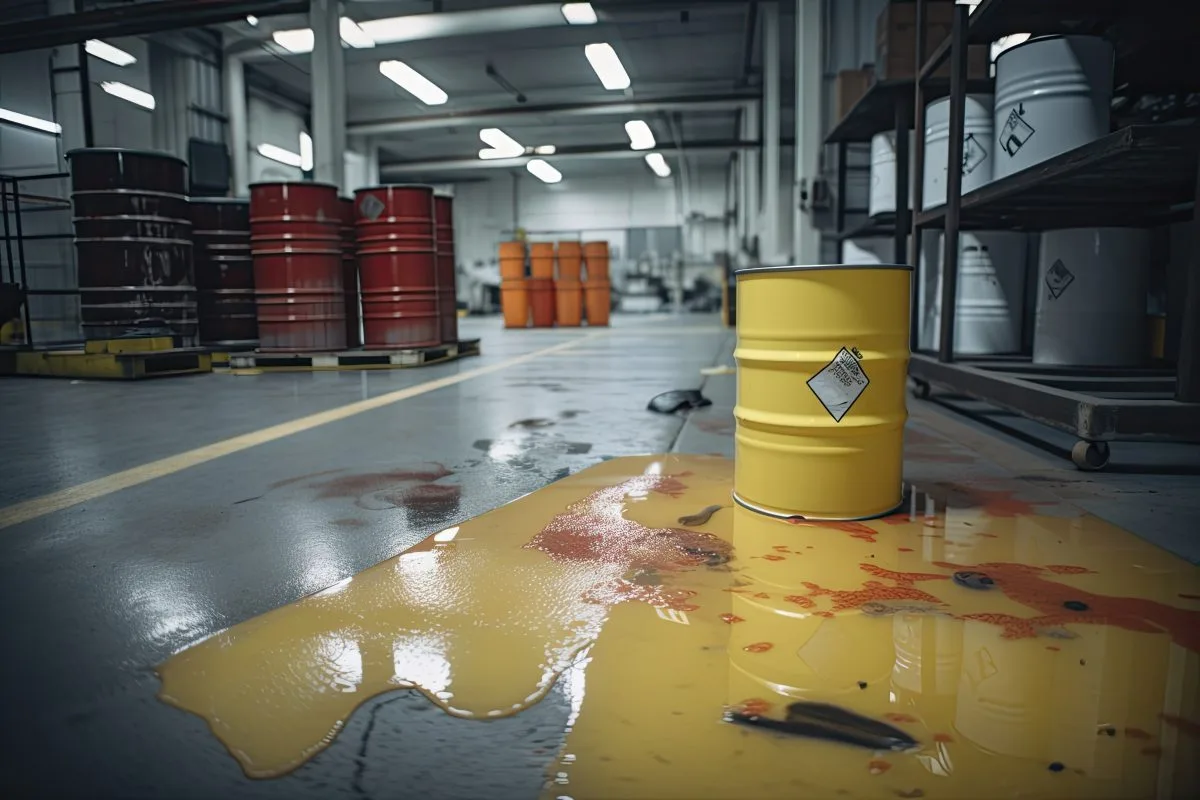
While major incidents often attract attention, many chemical exposures occur during routine daily tasks, including decanting, dosing, sampling and washdown operations. A new workplace safety guide explores how organisations can better prevent chemical hazards through stronger risk assessment systems, practical control measures and improved emergency readiness.
Hughes Safety Showers’ guide explains that chemical hazards are not limited to the substances themselves, but are heavily influenced by how and where chemicals are used. Everyday activities such as drum changing, manual transfers and equipment cleaning can create splash, spill and exposure risks if controls are poorly managed or bypassed. Common contributing factors include unlabelled containers, incompatible chemical storage, inadequate ventilation, rushed processes and unclear procedures for non-routine work.
To help organisations improve chemical safety management, the guide outlines a practical step-by-step risk assessment approach. This includes creating and maintaining an accurate chemical inventory, using Safety Data Sheets (SDS) and labels correctly, and assessing tasks based on exposure routes, task frequency and who may be affected. The guide emphasises that effective risk assessments should focus on how chemicals are actually used on site, rather than relying solely on generic hazard information.
A key section focuses on applying the hierarchy of controls to reduce exposure risks as far as reasonably possible. The guide explores how elimination and substitution can remove hazards entirely, while engineering controls such as closed transfer systems, bunding, ventilation and secure couplings can significantly reduce the likelihood of spills and splashes. Administrative controls, including permit-to-work systems, safe operating procedures and targeted training, are also highlighted as critical for managing residual risk, particularly during maintenance or non-routine activities.
The guide also reinforces the importance of personal protective equipment (PPE) as the final layer of protection. Correct glove selection, proper fit and user training are identified as essential factors in ensuring PPE remains effective when higher-level controls cannot fully eliminate exposure.
Alongside prevention, the publication places strong emphasis on emergency readiness. It highlights how the first moments following a chemical splash or spill are often critical in determining injury severity. Clear emergency procedures, trained personnel and rapid access to emergency safety showers and eyewash equipment can all help reduce the impact of accidental exposure.
The guide also references recognised standards, including EN 15154 and ANSI Z358.1, which recommend extended flushing using tepid water following chemical contact. By combining preventative controls with effective emergency response planning, organisations can reduce both the likelihood and severity of workplace chemical incidents.
Designed for safety managers, facilities teams and operational leaders, the guide provides practical advice to help organisations strengthen chemical safety procedures, improve compliance and create safer working environments across a wide range of industrial and commercial settings.
Emergency safety showers are for emergencies only and are designed to protect people following accidental chemical contact. Their purpose is to flush hazardous substances from the skin quickly, helping to reduce the severity of chemical burns after a spill or splash.
Both EN 15154 and ANSI Z358.1 reference the need for extended flushing, commonly cited as 15 minutes, to ensure thorough decontamination. To support this, standards also specify the use of tepid water – water that is neither too hot nor too cold.
Find out more about How to Prevent Chemical Hazards in the Workplace
For more information, visit www.hughes-safety.com


HSM Newsletter
HSM publishes a weekly eNewsletter, delivering a carefully chosen selection of the latest stories straight to your inbox.
Subscribe here