
Clearing the air
THE KEY steps involved in building an effective respiratory protective equipment (RPE) programme are explored by Adele Gracen, from selecting the correct RPE to ensuring proper training, maintenance, and long-term protection for workers exposed to hazardous substances.
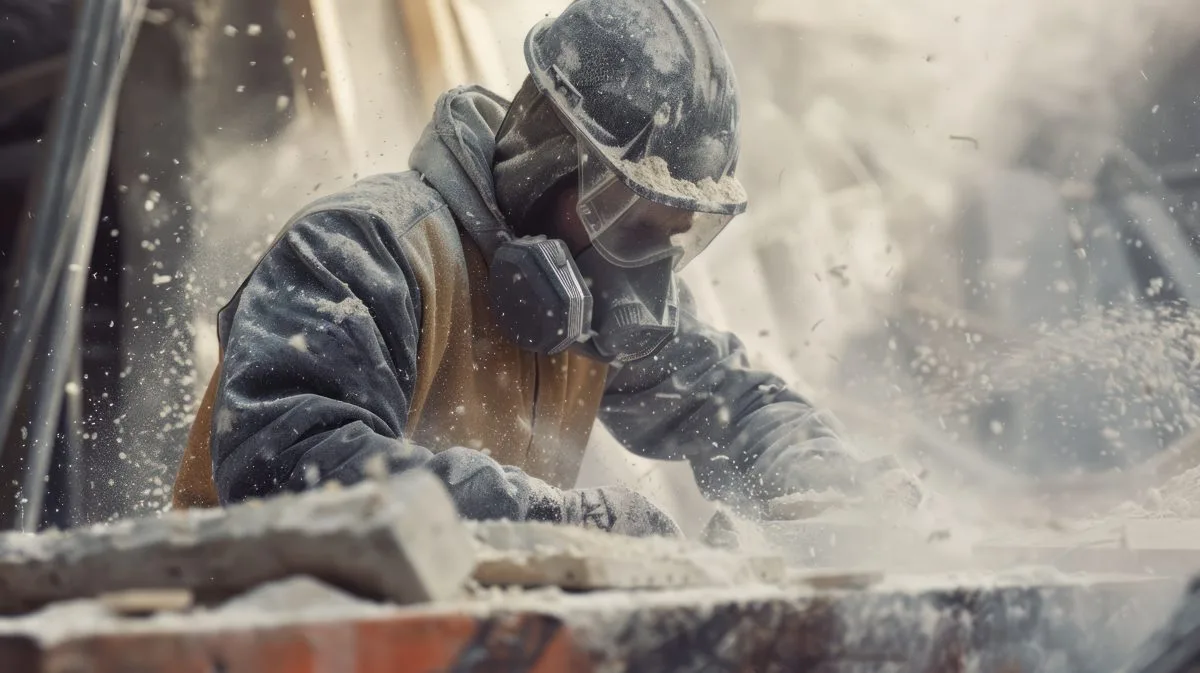
In any industry where employees are at risk of exposure to hazardous materials, respiratory protective equipment (RPE) is not just a precaution, it is a necessity. Under the COSHH Regulations 2002, employers have a legal responsibility to control substances hazardous to health and to prevent and adequately control their employees’ exposure to these substances. RPE, alongside personal protective equipment (PPE) must be worn when other control measures to protect against hazardous substances are not possible, or insufficient on their own.
If RPE is utilised as a control measure, it must be included with an organisation’s operational procedures. This is essential for respiratory equipment selection, use, maintenance and storage. Embedding RPE into formal procedures ensures that staff are properly trained in its correct use and that the correct equipment is selected and suitable for the hazards present.
Different types of RPE
From disposable masks to motor powered respirators, there are various categories and styles of RPE. The main categories include:
- Non-powered respirators – Relies on the wearer’s breathing to draw air through the filter(s)
- Powered respirators – Delivers a supply of clean air, which has passed through a filter via a motor powered fan unit
- using a motor to pass air through the filter(s)
- Breathing apparatus – Provides clean air via an independent source. For example, an air cylinder or air compressor
Breathing apparatus and respirators are available in various guises, including loose-fitting facepieces such as hoods and helmets, or tight-fitting facepieces (often referred to as masks) which rely on having a full seal with the wearer’s face.
With a diverse range of options available, there is no one size fits all approach for respiratory protection. Employers must assess the hazard, the working environment and consider the wearer when selecting RPE. The chosen protection should be adequate and must be right for the hazard, reducing exposure to the level required to protect the wearer’s health. It also needs to be suitable, and be right for the wearer, the task and environment – the wearer must be able to work freely, without the RPE causing additional risks. Suitability factors to consider include user wear time, work rate, environmental conditions and if the wearer has any facial hair and/or facial markings.
Respiratory filter selection and use
For systems which require the use of filters, selecting the correct filter is crucial. Filters are available for solid or liquid particles, vapours and gases. Depending on the respiratory equipment selected, they will either be an intrinsic part of the equipment, or come separately to be changed on reusable respirators.
Once fitted, the respiratory system will rely on the filter material to remove the hazard, with the filter material being different depending on the hazard. Some filters can be used in combination with one another depending on the substances or forms present in the working area. Options include multi-gas filters, which are suitable for more than one type of gas and vapour, and combination filters which are suitable for situations where the wearer needs protection against both particles and specific gases or vapours. Neither particle, or gas and vapour filters can be used in oxygen-deficient atmospheres.
Why the right fit matters
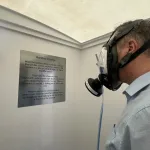
If a tight-fitting facepiece (mask) is selected to provide protection, a face fit test is required to ensure the mask fits the wearer’s face and provides a tight seal. Without a tight seal, the RPE will leak and put the wearer at risk.
Face fit tests should be conducted by a competent person – they should be appropriately trained, qualified and experienced. Whilst not a legal requirement, fit testers can obtain a Fit2Fit accreditation to confirm their competence. Fit2Fit is known as the gold standard and assures the highest standards for face fit testing.
There are two different types of fit testing – qualitative and quantitative. A qualitative fit test is a subjective method and utilises a test agent, often a bitter solution, with the wearer being tested if they can smell or taste the solution. A quantitative test objectively measures a respirator’s fit, using a test device to count particles inside and outside the mask worn by the wearer. This data is then used to calculate a fit factor to identify how tightly the respirator is sealed to the wearer’s face.
Face fitting should be carried out at regular intervals and is always necessary if there has been any changes to the wearer’s face, e.g. weight loss/gain. If an employee wears more than one type of tight-fitting facepiece, then each type must be fit tested. If wearing tight-fitting respirators, the wearer should at no point have facial hair as this will impact the seal – a different type of head top will be required (e.g. hood, helmet).
RPE will only provide adequate protection if employees use respiratory protection the way they are intended to be used, and follow correct working practices. During a fit test, the wearer will be shown the correct way to wear their respiratory protection and this should always be followed. Misuse could lead to an ineffective use, leading to leaks and putting the wearer at risk of exposure.
Storage of RPE should not be overlooked either – any equipment not stored correctly after use could lead to respirator damage. Users should always follow the manufacturer’s storage instructions.
Maintenance is key
For respiratory protection to remain effective during use, a maintenance system is essential to ensure the RPE continues to provide the degree of protection for which it was designed.
A maintenance system should cover cleaning, examination, replacement, repair and testing. The hazard, the working environment and type of protection will all influence the maintenance system, e.g. RPE worn during asbestos removal will have a different set of cleaning and storage procedures to RPE worn during spray painting. The RPE manufacturer’s maintenance schedule should always be followed.
Flexible solutions
Most employers providing RPE understand the importance of a robust maintenance system, however one of the biggest barriers to this being effective is the project downtime. If the wearer requires a face fit or the mask needs servicing or repaired, the respirator cannot be worn, resulting in lost working time.
For most organisations who adopt RPE as a control measure, they will work with external suppliers to support operational procedures – including face fit testing and RPE maintenance and repairs.
Many organisations offering face fit testing operate from a fixed site, with some providers having the ability to carry out fit tests on-site but this is dependent on the site having a clean, controlled, area which will not affect accuracy of the seal check.
Any servicing should be carried out by a competent person, with many manufacturers working with third parties to create approved service centres. Working with an approved service provider can provide the employer and/or wearer with the peace of mind that any RPE servicing or repairs are being carried out correctly and the RPE will continue to work as expected and provide the correct level of protection.
Depending on the hazard or working environment, respirators can be contaminated (e.g. during works with silica dust or asbestos fibres) meaning there is a thorough protocol that must be followed when servicing, cleaning or repairing the ‘dirty’ respirators and this should never be done by the wearer.
Servicing, especially for contaminated equipment, is commonly done at a fixed site or premises, meaning downtime can extend to multiple working days.
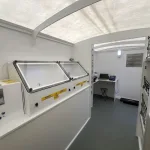
Whilst project downtime has previously been expected and common practice, this is no longer the case, thanks to the recent introduction to the market of a mobile respiratory servicing unit (RSU) – designed and manufactured by SMH Products, in partnership with leading respiratory suppliers 3M and Sundstrom. The mobile unit features dedicated space for face fit testing and a purpose built area which allows for safe and effective mask repair, servicing and decontamination in controlled conditions. The integrated waste water filter ensures any contaminants in the water from servicing and decontamination do not reach the watercourse and harm the environment. The facilities ensure there is no risk of harmful fibres or contaminants entering the area, meaning there is no risk to the wearer, the competent person carrying out the servicing or anyone within the surrounding area.
The unit is unique to the market and is the first of its kind to offer the services within a mobile unit, making it suitable for any site across the UK. Being able to have these services carried out on site reduces project downtime significantly, whereby employers may have previously lost working days, this can be reduced to as little as 20 minutes.
Since being introduced to the market in Autumn 2025, organisations have adopted the unit and accompanying services as part of their own health and safety programs. The unit is being utilised by employers to carry out regular face fits and RPE servicing, allowing them to easily fulfil their legal duty without compromising employee safety. The mobile unit provides employers with convenience and flexibility, allowing them to undertake a proactive approach to respiratory protection and occupational safety, whilst minimising downtime.
Adele Gracen is digital marketing executive at SMH Products. For more information, visit https://smhproducts.com
HSM Newsletter
HSM publishes a weekly eNewsletter, delivering a carefully chosen selection of the latest stories straight to your inbox.
Subscribe here