

Legal spotlight
KEVIN BRIDGES explores occupational road risk and how organisations can reduce incidents by addressing driver impairment caused by drugs or alcohol.
Earlier this year the UK government published its first Road Safety Strategy (“the Strategy”) in over a decade, placing renewed emphasis on work-related driving, including proposals for a National Work-Related Road Safety Charter and the creation of a new Road Safety Investigation Branch. To be developed in collaboration with business and industry, the National Work-Related Road Safety Charter will be designed to reduce work-related road risk and improve road safety. It will promote good practice and organisational accountability.
The Strategy follows the Department for Transport’s publication late last year of its report on road casualties involving driving for work. That report estimated that almost 30% of road collision fatalities involved a working driver, with over 4,000 non-working killed or seriously injured collisions involving a working driver or rider. This underlines the scale of occupational road risk.
Whilst no new legal duties for employers are introduced at this stage, the Strategy makes it clear that “regulatory measures will be considered if voluntary engagement is insufficient in reducing work related road risk”. Driving for work is already captured under existing health and safety requirements, but the government has made its intentions clear: stronger emphasis on organisational responsibility, prevention and learning from incidents, and the establishment of the Road Safety Investigation Branch to examine patterns and high-risk situations, including those involving work-related journeys.
With the spotlight increasing on work-related driving, employers are, or should be, reviewing their risk assessments. Where driving forms part of an employee’s role, employers must be able to demonstrate that risks are properly assessed, that competence is assured, and that governance arrangements are clear and consistent. A key part of that will be ensuring that their impairment and testing policies are robust, proportionate, and defensible. Where staff drive for work, operate machinery or perform other safety-critical roles, impairment, whether from alcohol, drugs or medication, becomes part of that risk landscape.
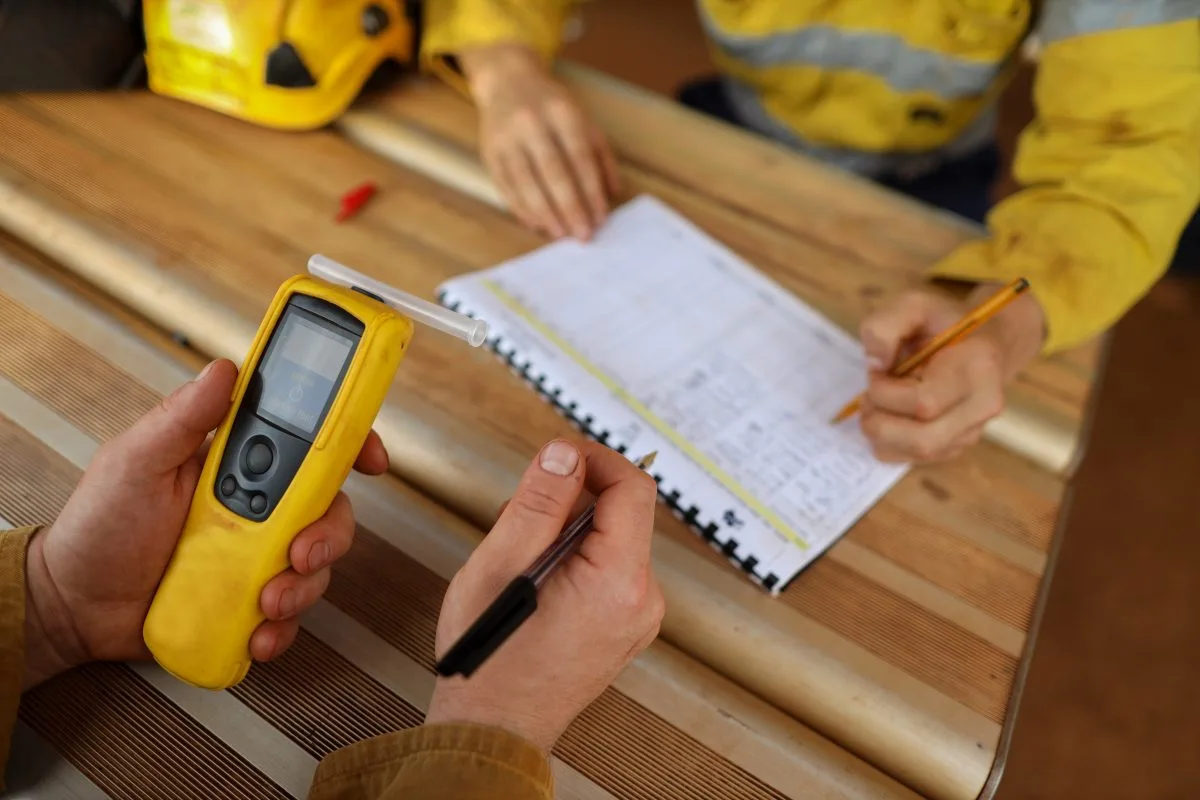
Drug and alcohol testing can form part of an employer’s overall health and safety policy, but such testing must be justified by a clear safety rationale (for example, where people are in safety critical roles, they might drive for work, they may work at height or operate machinery), underpinned by consent, and handled with appropriate confidentiality and care. Policies need to be proportionate to the level of risk and integrated into broader health and safety systems.
Consent should be informed and explicit. The professionals involved must also ensure data protection compliance and confidentiality. Ultimately, the results of drug and alcohol testing should only be seen by those on a strictly authorised and need-to-know basis only.
Drug and alcohol testing should be part of a broader risk management framework, one which aims to do two things. On the one hand, support openness and encourage people to admit they may have substance misuse issues, but at the same time clearly outlining when and why drug and alcohol testing will take place in the workplace. That may be, for example pre-employment, following an incident, where there is reasonable cause, and randomly. The Health and Safety Executives guide to managing drug and alcohol misuse at work states that where a worker discloses they may have a drug or alcohol problem, an effective policy should aim to support the worker. This may mean a change in duties, even temporarily. However, the policy should also highlight when disciplinary action will be taken.
As always communication is key. Human resource and health and safety professionals should collaborate to ensure workers understand why testing is being done and that its results are reliable and credible. This may mean, for example, that any non-negative results are corroborated by an accredited laboratory. At the end of the day, if workers are part of the process, that should help build a culture of compliance and avoid the policy being regarded with fear and suspicion.
Kevin Bridges is a partner and head of health and safety at Pinsent Masons. For more information, visit www.pinsentmasons.com
Related posts


HSM Newsletter
HSM publishes a weekly eNewsletter, delivering a carefully chosen selection of the latest stories straight to your inbox.
Subscribe here