


Working together
WHEN IT comes to above-the-neck PPE, compatibility is key to ensure they work together to provide effective protection. Louise Charlton provides an insight.

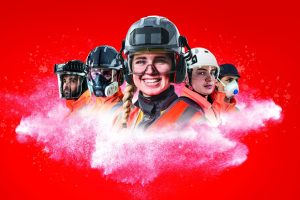
Above-the-neck PPE provides vital protection to the head, eyes, ears and respiratory system – safeguarding the wearer against brain injury; preserving their sight and hearing; and preventing inhalation of life-threatening exposure hazards like asbestos and crystalline silica. With so much to protect in a relatively small area, there is a high chance of interference as multiple pieces of equipment compete for space.
The UK PPE at Work Regulations 1992 (PPE Work Regs) place duties on employers to ensure that, when multiple PPE items are worn together, the equipment is compatible and continues to be effective against the risks facing staff.
And continued effectiveness is key here – compatibility is not only about two or more items fitting together; each piece of equipment needs to operate correctly and provide the intended level of protection.
While respiratory protective equipment (RPE) and hearing protection are not covered by the PPE Work Regs, the COSHH and Control of Noise at Work Regulations include similar duties to ensure other PPE is compatible. Ear defenders, ear plugs, and tight-fitting RPE all need an effective seal to perform as intended and preventing interference from other equipment is critical.
Incompatibility can compromise performance and even introduce secondary risks, causing PPE to become a hazard itself.
Incompatible equipment reduces protection
Imagine a half mask worn with safety spectacles: both sit on the wearer’s nose bridge. Without ensuring compatibility, safety specs may interrupt the mask seal and allow harmful contaminants to leak in. Exhaled air can also escape through gaps around the nose, directing it toward the spectacle lenses and causing misting.
In this example, incompatible equipment exposes the wearer to dangerous substances and obscures their vision, increasing the risk of slips and trips. When PPE impedes the wearer or introduces additional hazards, it is more likely to be removed, leaving staff entirely unprotected.
Similar considerations apply to interconnecting PPE. Incompatible attachments are not only less comfortable and harder to use, they also have the potential to reduce protection or even put the wearer at risk of injury.
Helmet-mounted ear defenders work with compatible helmets to provide the right attenuation, and products are tested together to assess performance. Even if ear defenders can be fitted to another helmet, the testing data is no longer valid, and protection may be severely reduced. It can also increase attenuation to an unsafe level, preventing the wearer from hearing important warning sounds, like alarms or approaching vehicles.
Accessories must be compatible to avoid compromising the protection offered by PPE. At this time of year, hoodies and beanies hats are often worn under helmets to keep warm. This can prevent the harness from tightening sufficiently which limits shock absorption performance – putting wearers in danger in the event of an impact and risking enforcement action against the business.
Simply banning thermal wear results in discomfort and reduced morale at best. At worst, the effects of cold weather may cause mistakes or even lead to health problems. For wearers of religious headwear, prescription eyewear and medical devices like hearing aids, ensuring safe, fully compliant integration is a must, not an option.
When PPE works in harmony…
Now compare that with using compatible equipment. Approved thermal liners are tested with the liner fitted under the helmet, replicating how items are worn in-use. Harness fit is assessed before shock absorption tests to verify impact protection.
This ensures the helmet can still be tightened securely and provide the right level of protection. Wearers are able to keep warm and work safely. By providing a compatible alternative, staff feel listened to and valued which – along with the comfort factors – has a knock-on effect on productivity.
When RPE and eye protection are compatible, the mask seals properly to provide full filtration efficiency and keep lenses clear. Correct positioning of the eyewear ensures optimum optical performance and coverage. Without interference around the nose bridge, the equipment is more comfortable and less distracting, encouraging buy-in from wearers.
Wearer acceptance is crucial to compliance. HSE guidance on the PPE Work Regs (L25) advises that the aim when selecting PPE should be to provide maximum protection while minimising discomfort, as this makes it more likely to be worn properly. Compatibility is an important part of this – equipment that is designed to work together provides effective protection and eliminates interference to increase comfort, allowing wearers to focus on the job.
With comfortable equipment enabling full mobility and efficiency, staff satisfaction increases, helping to reduce turnover and retain skilled employees. Time and cost savings are made as projects are completed faster with greater accuracy. You also save time and money from resourcing unsuitable items by specifying compatible equipment at the initial selection stage.
Compatible PPE is an investment that pays returns throughout the business – supporting regulatory compliance, productivity and a strong safety culture.
How to select compatible PPE
Regulation (EU) 2016/425 – applying to design, production and assessment procedures for PPE – requires manufacturers to make items compatible if intended for simultaneous use. Sourcing products from one manufacturer therefore helps to ensure your PPE works together.
Ear defenders approved to European standard EN 352-3 are tested and certified with specified helmets and faceshields. Looking at the ear defender certificate, you can see which products are compatible and check the SNR level for each model.
In the past, most other standards focused on testing products individually. However recent updates are expanding requirements to include integration and compatibility.
The new EN 397:2025 Industrial Protective Helmet standard includes testing for attachments and accessories. Specified performance tests will be conducted with additional items fitted to the helmet – such as visors, ear defenders, and bracket-mounted lamps – checking that they do not affect head protection performance.
It is important to remember that product compatibility does not guarantee a fit for every wearer. With different head sizes and facial features, what works for one individual may not be suitable for another.
The BS 30417 Inclusive PPE standard recommends trying different options for different members of staff. Selecting PPE is not about finding a one-size-fits-all solution; the aim is to ensure the correct fit for each wearer.
Fit testing is the most effective way to assess tight-fitting RPE and hearing protection. While laboratory testing cannot account for donning and compatibility, fit testing assesses individual wearers and the other equipment they need for work.
For tight-fitting RPE, fit testing is a legal requirement. Each wearer must be assessed in their mask, along with other above-the-neck PPE and personal items like glasses. Hearing protector fit testing is not mandatory but can be used to verify compatibility in the same way. Commercially available systems report the attenuation offered to wearers, assessing fit as well as interference from hair, jewellery and additional equipment.
No one is better placed to understand the impacts of incompatible PPE than the wearers themselves. Involving staff in selection, trialling a range of products and getting their feedback is the best way to identify potential issues.
Training and ongoing engagement is vital to ensure PPE remains effective. Implementing a reporting system for fit and compatibility issues encourages staff to raise problems when they arise instead of removing or adjusting items to work comfortably.
Integrated PPE simplifies selection
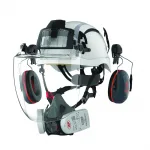
Helmets with integrated eyewear prevent interference with ear defenders and prescription glasses. Loose-fitting powered air-purifying respirators (PAPRs) are available with built-in helmets and faceshields, providing a compatible option that is suitable for wearers with facial hair.
Returning to the L25 guidance: if your risk assessment identifies the need for respiratory, head and eye protection, you could select a mask, helmet and safety specs – providing the items are compatible – or opt for a loose-fitting PAPR offering combined protection.
While the first option meets legal requirements, ensuring compatibility and a fit for every wearer can be difficult and time-consuming. The PAPR eliminates compatibility issues, fit testing and facial hair concerns for faster, simpler selection. It also increases comfort, helping to improve wearer acceptance and make sure PPE is worn when it should be.
Manufacturers can offer advice on selection and provide documentation to verify the testing and certification performed.
New compatibility assessment service
With various legal requirements and performance standards to consider, finding the right equipment and making sure it complies can be a complex process. To help businesses and end users ensure the safe integration of PPE and accessories, JSP is launching a new compatibility assessment scheme.
JSP products are designed, tested and certified to work together, but many customers rely on cross-brand equipment integration to keep their teams protected. The new compatibility service establishes a process through which third party brands can achieve fully compliant integration with JSP PPE.
The scheme offers two routes to verify compatibility, applying assessment procedures relevant to different types of equipment:
Level 1 – JSP Approved Compatible – Primarily aimed at non-PPE accessories, this approach involves internal testing and evaluation to assess compatibility, comfort and performance.
Level 2 – Certified JSP Compatible – This route is for PPE and accessories that may affect product conformity, applying the same internal assessments plus external testing and approvals to gain independent certification.
‘Our customers rely on seamless integration between their personal protective equipment and accessories,’ said Matthew Judson, quality director at JSP Ltd. ‘This scheme provides a trusted path to achieve compatibility while ensuring full compliance with safety legislation.’
Louise Charlton is technical copywriter at JSP. For more information visit www.jspsafety.com.
Related posts

HSM Newsletter
HSM publishes a weekly eNewsletter, delivering a carefully chosen selection of the latest stories straight to your inbox.
Subscribe here