



Protect workers from solid particle hazards
SOLID PARTICLES, often referred to as ‘dust’, can pose a significant threat to the health and safety of workers in industrial and manufacturing environments. These microscopic particles can lead to a range of serious health problems, from respiratory illnesses to cancer. Steve Marnach explores the dangers of workplace dust exposure and outlines steps to mitigate these risks.

According to the International Labour Organization (ILO), nearly 3 million people globally die due to work-related causes each year1. A significant portion of these is attributed to workplace respiratory diseases, which alongside circulatory diseases and malignant neoplasms, are listed among the top three causes of work-related deaths2. This sentiment is echoed by the World Health Organisation (WHO) that found workplace exposure to air pollution including particulate matter, gases, and fumes responsible for triggering 450,000 deaths3.
Statistics on the exact number of affected individuals in Europe by each cause are not readily available; however, the EU-OSHA Workers’ Exposure Survey (WES) on cancer risk factors in Europe is seeking to address this lack of data. Initial findings suggest that there is an increased risk for workers in micro or small-sized workplaces compared to medium-sized or large workplaces and for those working over 50 hours a week4.
Microscopic solid particles – commonly referred to as ‘dust’ – are one of the primary causes of workplace respiratory diseases. Dust is usually defined as a solid that has been broken down into powder or fine particles5. Industries like manufacturing, mining, agriculture, and construction expose workers to harmful dust and particles from processes such as grinding, cutting, drilling, and sanding. These particles, which can be invisible to the naked eye, can be inhaled, ingested, or absorbed through skin contact, and can lead to various health issues.
Airborne particles can accumulate in the lungs leading to various lung diseases such as silicosis, asbestosis, and chronic obstructive pulmonary disease (COPD), while those on surfaces can irritate the skin, leading to dermatitis, or triggering allergic reactions. Some particles, such as certain metals, can be absorbed through the skin and enter the bloodstream, causing health effects. Exposure depends on factors like particle concentration and frequency of contact.
Key types of hazardous dust
From an occupational health perspective, dust is categorised based on its physical and chemical properties that determine its potential health impact. There are three categories: inhalable dust, thoracic dust, and respirable dust. Inhalable dust refers to larger-sized particles, most of which will be filtered out in the nose and throat. Thoracic dust refers to the smaller-sized dust particles that can reach the lungs. Respirable dust is small enough to be inhaled deeply, penetrating the gas-exchange region of the lungs.
To better understand the dangers of dust, we will discuss asbestos and polychlorinated biphenyls (PCBs).
Asbestos
Asbestos, a group of naturally occurring fibrous silicate minerals, was widely used for centuries in various industries for its fire resistance, thermal insulation, and mechanical strength. Its versatility led to its use in a wide range of products, including thermal insulation materials, floor tiles, roofing, asbestos cement products, electrical insulation, and, more recently, automotive components like brake pads and clutch linings.
The deadly nature of asbestos led to its widespread ban in many countries, including across Europe since 2005, but it can still be found in many buildings and machines. Today, millions of people worldwide are still affected by asbestos-related diseases, even decades after exposure. While many countries have implemented strict regulations to limit asbestos use and exposure, the global trade in this hazardous material continues. The removal and safe disposal of asbestos-containing materials remain a significant challenge, especially in developing countries.
Often referred to as the ‘silent killer’, asbestos is a highly friable material, and is primarily considered respirable dust. Once its microscopic fibers are lodged in the gas-exchange region of the lungs, they can cause severe health problems like asbestosis, cancers, long-term respiratory disease and even death.
Polychlorinated biphenyls (PCBs)
Polychlorinated biphenyls (PCBs), though not airborne particles like dust, remain a serious health threat to workers.
PCBs are a group of man-made organic chemicals consisting of carbon, hydrogen, and chlorine atoms. Due to their chemical stability, heat resistance, and electrical insulating properties, PCBs were used in hundreds of industrial and commercial applications from the 1930s until manufacturing was banned in 1979. They were used in a variety of products, including electrical equipment, hydraulic fluids, heat transfer fluids, paints, plastics and rubber products, floor finishes, and building materials.
When these products are damaged or disposed of improperly, PCBs can leak into the environment, contaminating soil, water, and air. They can persist in the environment for many years, posing a long-term threat to human health and the ecosystem6. Their primary health risks stem from ingestion and skin contact7. Workers in industries that deal with PCB-contaminated materials, such as electrical equipment recycling or demolition of industrial and residential buildings, are at a higher risk of exposure.
Exposure to PCBs can lead to a range of health problems, including cancer, neurological effects, immune system damage, and liver damage. Other common effects include skin conditions like chloracne, respiratory issues, and neurological effects. The severity of health effects depends on the level and duration of exposure, but studies have shown that even low levels of exposure to PCBs over long periods can have significant health consequences.
Other types of dust that can be harmful when inhaled include metal, wood, coal, and cotton dust8. These dusts can lead to various respiratory problems and diseases like asthma, silicosis, pneumoconiosis, and extrinsic allergic alveolitis (EAA)9.
Controlling the spread of hazardous dust particles
So, what can employers do to protect workers? They need to identify all complex hazards, accurately quantify exposure levels, and assess the health risks associated with specific particle types. Next, engineering solutions should be implemented. Examples include installing and maintaining effective ventilation systems to dilute and remove airborne particles; enclosing processes that generate dust to minimise exposure; and using water or other liquids to suppress dust generation during processes like cutting, drilling, or grinding.
Administrative controls are also effective. Examples include implementing safe work practices to minimise dust generation and exposure, such as using low-dust tools and techniques; providing regular training to workers on the hazards of dust exposure, proper use of PPE, and emergency procedures; and conducting regular health monitoring, including lung function tests, to identify early signs of respiratory problems.
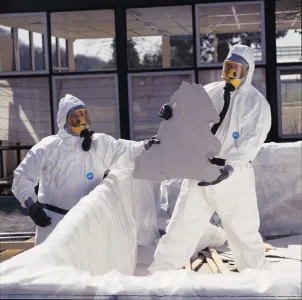
If these controls have been applied and residual risk remains, employers must provide and ensure the proper use of personal protective equipment (PPE). Employers should ensure proper selection, fit testing, and maintenance of respirators, and provide appropriate protective clothing, such as coveralls, gloves, and safety glasses, to minimise skin and eye exposure. Regular inspection and maintenance of PPE is crucial to ensure it remains effective and in optimal condition.
Employers have a responsibility to protect their workforce from the silent threat of solid particle hazards. By understanding the risks and implementing effective controls, they can significantly reduce the impact on workers’ health and safety.
Steve Marnach, is EMEA training manager & specialist critical environments at DuPont Personal Protection. For more information, download DuPont’s free e-Guide, Minimizing Exposure To Hazards With The Right Protective Equipment: Hazardous Dusts: https://www.dupont.co.uk/personal-protection/dust-particle-protection.html?src=EMEA-EN_PP-PPTyvek-ChemicalIndustrial_PR_Internal_SolidParticles_032025#eguide
References:
1 https://www.ilo.org/resource/news/nearly-3-million-people-die-work-related-accidents-and-diseases
2 https://www.ilo.org/resource/news/nearly-3-million-people-die-work-related-accidents-and-diseases
5 https://ec.europa.eu/taxation_customs/dds2/SAMANCTA/EN/Safety/Dust_EN.htm
6 https://www.dupont.co.uk/personal-protection/dust-particle-protection.html
8 https://www.dupont.co.uk/personal-protection/dust-particle-protection.html
Related posts

HSM Newsletter
HSM publishes a weekly eNewsletter, delivering a carefully chosen selection of the latest stories straight to your inbox.
Subscribe here