


Going solo
WHEN YOU’RE working alone, there’s no colleague nearby to have your back. As lone working becomes increasingly common, organisations need to ensure their people are never left without the support and protection they need, explains Miriam O’Connell.
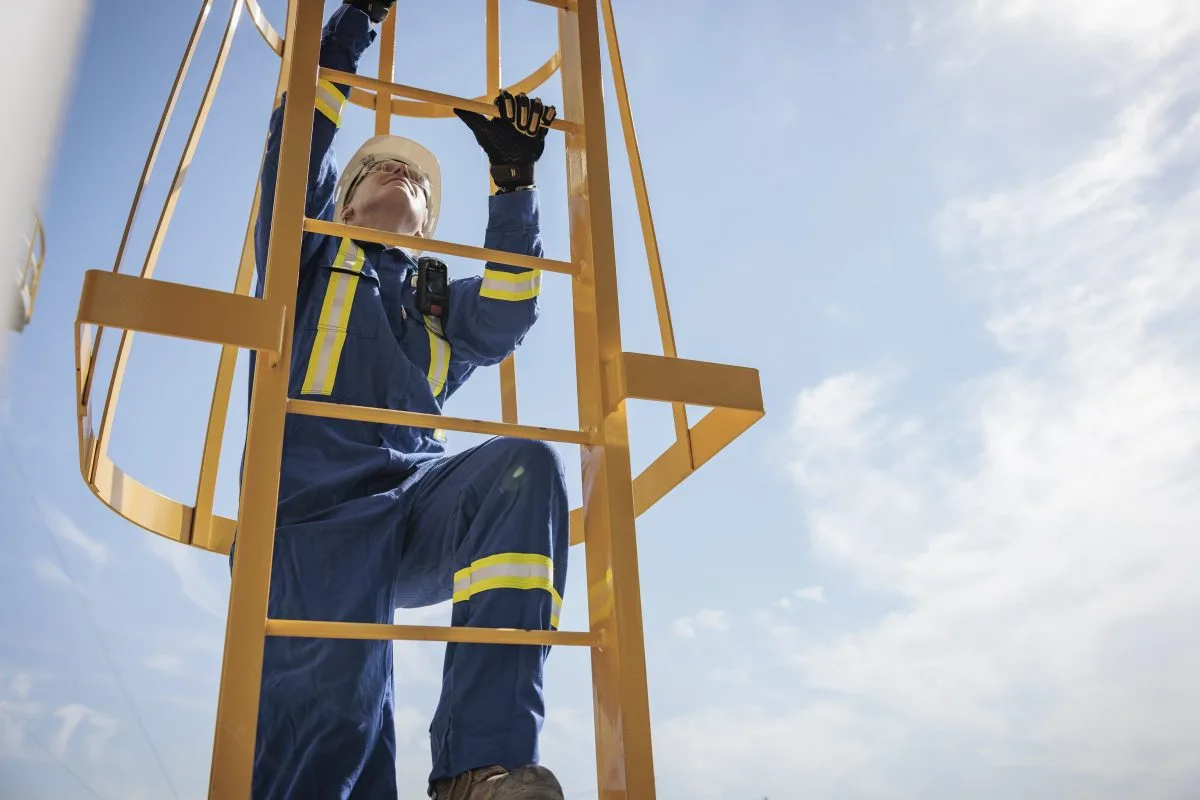
As hybrid models, mobile working and stretched field teams become the norm, the number of people working out of sight and sound of colleagues continues to rise. In the UK, an estimated eight million people — around one in four of the working population — can be classed as lone workers. That figure includes those who physically work alone and those who interact with the public without immediate, nearby support from colleagues or supervisors. Despite the size of group, research from Verdantix suggests nearly half (44%) of lone workers report feeling unsafe at work, and one in five say they have struggled to get help after an incident.
Lone workers are no longer confined to industries traditionally associated with isolation. From utility engineers and home-visit healthcare workers to mobile retail staff, field technicians and night-shift personnel, the cohort now spans almost every sector of the UK economy. That makes a robust, well-governed lone worker safety programme a priority for a much wider group of British employers than ever before — and one with both legal and moral weight.
Who is a lone worker?
The Health and Safety Executive defines lone workers as those who work by themselves without close or direct supervision. In practice, this captures a broad range of working patterns:
- Workers at a fixed site, separated from others — for example, single-occupancy plant rooms, warehouses operating across multiple floors, or staff working in different rooms of the same building.
- Workers away from a main site — including construction trades, utility field engineers and home-based or hybrid workers.
- Mobile workers — drivers, service technicians and sales representatives moving between sites and customers.
- Workers on irregular hours or shifts — emergency responders, healthcare staff, security teams and retail workers operating outside normal hours.
Mapping the workforce against these categories is often the first revelation: many employers find they have significantly more lone workers than they realised, particularly when out-of-hours and customer-facing roles are included.
The risks they face
Lone workers are exposed to the same hazards as their colleagues, but with the consequences amplified by isolation. Common physical risks include slips, trips and falls; electrocution; equipment and vehicle accidents; sudden illness; and exposure to toxic or explosive gases. For those in customer-facing or public-contact roles — meter readers, bailiffs, emergency services personnel — the risk of verbal abuse and physical violence is significant and growing and was a recurring theme at this year’s Health & Safety Event at the Birmingham NEC.
The mental health dimension is just as important. Working in isolation can drive stress, anxiety and feelings of disconnection, while the after-effects of incidents — even verbal threats — can have a lasting impact on wellbeing. Research consistently shows that loneliness is associated with higher rates of depression, anxiety, and sleep problems, and that around 59% of lone worker incidents involve stress, mental health issues, or fatigue. For employers, the knock-on effects include higher absence, lower morale, reputational risk and difficulty recruiting and retaining staff in roles seen as unsafe.
The UK legal context
Although there is no single piece of UK lone worker legislation, several core duties apply. Under the Health and Safety at Work etc. Act 1974, employers must, so far as is reasonably practicable, ensure the health, safety and welfare of all employees — including those working alone. The Management of Health and Safety at Work Regulations 1999 then requires employers to assess risks to lone workers, provide appropriate training and supervision, and maintain effective communication with them. There is also a clear duty to help prevent work-related violence.
For organisations choosing to support their programme with technology, BS 8484 sets the British Standard for the provision of lone worker services, covering devices, smartphone applications, alarm receiving centres, training and response. It is the benchmark UK police forces use when prioritising response to lone worker alarms, and is increasingly referenced in procurement specifications across utilities, healthcare, waste management and field services.
Building an effective lone worker programme
A strong programme rests on five practical pillars.
1. Identify your lone workers and the risks they face. Use the working patterns above as a starting point and map every role, task, and shift that involves working in isolation. A thorough audit and risk assessment — conducted in-house or with a third party — is the foundation everything else is built on.
2. Document a clear policy. Although every policy is unique, the essentials are consistent: a statement of purpose, identification and assessment of lone worker risks, clearly defined roles and responsibilities, reporting procedures and details of training and support. Practical detail matters — including how often workers should check in, how they should travel between locations, what equipment is required, and which communication channels to use in normal and emergency situations.
3. Train your people — and keep training them. Comprehensive training should cover hazard recognition, de-escalation techniques for public-contact roles, use of any safety equipment, and clear reporting procedures. A blend of on-site, virtual instructor-led and self-serve approaches tends to work best for distributed UK teams.
4. Champion change management. Implementing or refreshing a lone worker programme involves people doing their jobs differently. Engage workers early, explain the rationale for change, involve them in selecting equipment, and recruiting a network of internal ambassadors to support uptake. People are far more likely to embrace a new approach when the message comes from a trusted colleague.
5. Review, reassess and revise. A lone worker programme is never ‘finished’. Use post-training evaluations, employee surveys, and any usage data the technology generates to assess adoption, identify gaps, and make targeted improvements. The Plan-Do-Check-Act cycle is a useful framework for keeping the programme alive and continuously improving.
A real-world reminder of why this matters
The case for connected lone worker protection is rarely better made than by recent UK experience. One major UK water and wastewater provider, serving millions of customers across England, operates sites ranging from treatment works and biogas facilities to public roadways and underground sewer systems. These environments bring together exposure to hydrogen sulphide, chlorine, ammonia and sulphur dioxide; the risk of explosion from hot work or combustible gas; confined space entry; and lone work.
A 2020 explosion at an unrelated UK water treatment plant, where four workers died, underscored the need for a more robust and versatile approach. During a trial of a connected safety solution, technology detected gas levels reaching 75% of the explosive limit in an area previously believed to be non-hazardous. Work was stopped immediately and the area safely evacuated.
“Feedback we were getting from the team on-site was that they just want to do their jobs but had too many devices, apps and things to think about, and anything we could do to simplify the process would be beneficial for everyone.”
– Process Safety Business Partner, UK Water Utility
It is the kind of insight that crystallises why programme, policy and technology must move together. Without the right combination, a lone worker may not even know they are in danger — let alone be able to summon help.
A similar pattern is emerging in the UK waste management sector. One leading waste management organisation, which generates renewable energy from landfill gas, deployed connected personal gas detection to help protect workers operating in methane-rich environments while also providing greater visibility of hazard trends across multiple sites.
“With the data we’re able to collect, track and analyse, we can respond and adapt quickly if there is a risk of gas exposure, and also look back to take steps to mitigate that risk in the future.”
– CEO, UK Waste Management Company
Harnessing connected technology
UK employers are increasingly moving away from disconnected, device-only solutions towards fully connected platforms that bring lone worker protection, gas detection and team communication into a single ecosystem — and, crucially, give safety teams real-time visibility of who is where, and how they are.
Technology is not a substitute for a good policy, but it is a powerful enabler. When evaluating connected lone worker solutions, employers should look for:
- Location technology — GPS for outdoor positioning, ideally complemented by beacons indoors.
- Real-time visibility — built-in cellular connectivity that streams safety status to a monitoring platform.
- Reliable connectivity — satellite back-up for remote areas, and two-way voice or messaging to keep workers in touch.
- Emergency SOS — a discreet, manual way to call for help.
- Automatic alerts — fall, no-motion and missed check-in detection that triggers help without the worker having to ask.
- Gas detection — for those working in environments where toxic, asphyxiant or explosive gases are a risk.
- 24/7 monitoring — professional operators who can verify alerts, contact the worker and dispatch the emergency services.
- Reporting and analytics — usage and compliance data that allow safety teams to spot trends, target training and demonstrate compliance.
Building a culture of safety
The most effective lone worker programmes share a common feature: they are not seen as a compliance exercise, but as an active expression of an organisation’s duty of care. The legislation provides the floor, not the ceiling. A robust risk assessment, a clear and well-communicated policy, ongoing training, and the right connected technology together create something more valuable than the sum of their parts — a workplace where lone workers know, every shift, that someone has their back.
With the UK lone worker population only set to grow, the time to act is now.
Miriam O’Connell is monitoring services manager, UK & Europe, at Blackline Safety. For more information, visit www.blacklinesafety.com
Related posts


HSM Newsletter
HSM publishes a weekly eNewsletter, delivering a carefully chosen selection of the latest stories straight to your inbox.
Subscribe here