


Handle the risk
With more than two million UK workers at risk from vibrating tools, Tim Turney explains how better risk assessment, exposure data and health surveillance can help prevent Hand-Arm Vibration Syndrome (HAVS).

MOST WORKERS using vibrating tools will have heard of Hand-Arm Vibration Syndrome (HAVS), yet it remains one of the UK’s most significant occupational health risks.
Caused by prolonged exposure to vibration transmitted through hand-held power tools and machinery, the condition develops gradually as repeated vibration damages the blood vessels, nerves, muscles and joints in the hands and arms. Once that damage occurs, there is no cure.
Early symptoms are often subtle and can easily be mistaken for temporary discomfort after a day’s work. Workers may experience tingling or numbness in their fingers, reduced sensation, pain in the hands or wrists, weakened grip strength, or episodes of vibration white finger, where fingers become white, numb and painful in cold conditions due to restricted blood flow.
Without intervention these symptoms can become permanent, affecting not only a person’s ability to carry out precision work but, in severe cases, limiting their capacity to continue working with tools altogether. The impact extends well beyond the workplace, affecting everyday tasks and quality of life.
The encouraging news is that HAVS is almost entirely preventable when risks are recognised early and managed effectively.
Turning awareness into action
Although HAVS has been recognised for many years, misconceptions remain around how vibration exposure should be assessed and controlled.
Recognising this, the British Safety Industry Federation (BSIF) recently launched its ‘Bad Vibrations’ campaign to provide practical, easy-to-understand guidance for employers and workers. The campaign brings together expertise from manufacturers, certification bodies, test houses and occupational health specialists to simplify what can often seem like a highly technical subject.
The campaign reinforces a simple but important message: awareness alone does not prevent HAVS.
Employers need reliable information about workplace exposure, workers need training to understand risks associated and the importance of reporting early symptoms. Organisations need effective systems for managing vibration risks before permanent damage occurs, by implementing control measures.
Ultimately, successful HAVS prevention relies on informed decision making rather than assumptions.
Understanding legal responsibilities
The UK’s Control of Vibration at Work Regulations 2005 remain one of the world’s most comprehensive legislative frameworks for protecting workers from vibration-related injuries.
The Regulations require employers to assess vibration risks and either eliminate exposure where possible or reduce it to the lowest level reasonably achievable using suitable engineering and organisational controls.
Among the key employer responsibilities are:
- Carrying out suitable and sufficient vibration risk assessments.
- Selecting lower-vibration equipment where possible.
- Maintaining tools to minimise unnecessary vibration.
- Providing workers with appropriate information, instruction and training.
- Introducing health surveillance where employees are regularly exposed above the Exposure Action Value.
- Reviewing control measures to ensure they remain effective.
Employers should always look to keep exposure levels to As Low As is Reasonably Practical, with Regulations establish a daily Exposure Action Value (EAV) of 2.5 m/s² A(8). Once this level is reached, employers are required to introduce a programme of controls to reduce exposure and protect workers’ health. An Exposure Limit Value (ELV) of 5 m/s² A(8) also applies and should never be exceeded.
Rather than simply setting numerical limits, the Regulations encourage employers to adopt a proactive approach that prioritises eliminating vibration risks wherever possible before relying on administrative controls such as limiting exposure times.
The HSE’s guidance document, INDG175: ‘Hand-arm vibration at work – A brief guide’,1 reinforces this practical and proportionate approach, helping employers understand how to manage vibration risks effectively while remaining compliant.
Data drives better risk assessment
Every effective HAVS management programme starts with a competent risk assessment.
For many organisations, this begins by identifying which tools generate vibration and consulting manufacturer data or HSE vibration databases. These provide an excellent starting point, allowing employers to estimate likely vibration exposure.
However, published vibration values rarely tell the whole story.
Manufacturers measure vibration emissions under controlled laboratory conditions using prescribed test methods. In the real world, vibration levels are influenced by many variables, including the material being worked on, the force applied by the operator, working posture, tool maintenance, worn accessories and the duration of use.
The same grinder, breaker or hammer drill may produce significantly different vibration levels depending on how and where it is being used.
This is why competent risk assessments should consider actual workplace conditions rather than relying solely on published figures. Good quality exposure data enables employers to make informed decisions about where controls are needed and whether existing measures remain effective.
The role of vibration measurement
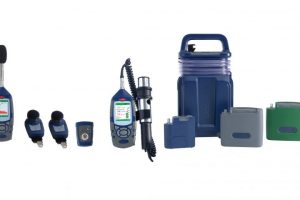
Where reliable workplace data is unavailable, or where published values do not reflect actual working conditions, vibration measurement becomes an invaluable part of the risk assessment process.
Hand-arm vibration is measured as acceleration, expressed in metres per second squared (m/s²). Because vibration is transmitted through the hand in three directions simultaneously, measurements are taken across the x, y and z axes before being combined to calculate the overall vibration magnitude.
The measurements are also frequency weighted in accordance with BS EN ISO 5349-1. This is important because the human body is more sensitive to certain vibration frequencies than others, meaning the measurement must reflect the biological effect of vibration rather than simply the mechanical movement of the tool.
From these measurements, employers can calculate an employee’s daily vibration exposure, known as A(8), which combines vibration magnitude with exposure duration over an eight-hour reference period. This provides a consistent basis for comparing tasks and determining whether employees are approaching the regulatory action or limit values.
Just as importantly, measurements should be undertaken using instrumentation specifically designed for hand-arm vibration assessment. Equipment complying with BS EN ISO 8041 helps ensure measurements are accurate, repeatable and suitable for occupational health applications.
Poor measurement techniques or the use of inappropriate general-purpose vibration meters can result in misleading exposure data, potentially giving employers a false picture of workplace risk.
Effective risk management
One area that continues to cause confusion is the distinction between measuring vibration and monitoring employee exposure.
Current HSE guidance makes it clear that measurement alone does not control vibration risk. Likewise, continuously monitoring exposure without taking action offers little benefit.
Instead, vibration measurement should be viewed as one element of a wider risk management strategy. Reliable exposure data allows employers to validate assumptions made during risk assessments, identify higher-risk tasks, evaluate the effectiveness of control measures and prioritise improvements where they will have the greatest impact.
When combined with lower-vibration equipment, effective maintenance, sensible work scheduling and worker training, accurate measurement provides the evidence needed to support informed decisions and demonstrate compliance.
Equipment selection and health surveillance
Reducing vibration exposure often starts long before a worker picks up a tool.
Selecting equipment with lower vibration emissions can significantly reduce long-term exposure, particularly where tools are used frequently throughout the working day. Equally important is maintaining equipment in good working order. Worn bearings, blunt accessories, damaged components or poor servicing can all increase vibration levels over time, making regular maintenance an essential part of vibration control.
Alongside engineering controls, health surveillance remains one of the most effective ways of identifying HAVS before permanent damage occurs.
Employees should be encouraged to report symptoms as soon as they appear, even if they seem minor. Early reporting allows employers to investigate exposure, review working practices and intervene before irreversible damage develops. Employers can then monitor employee symptoms with regular health check and implement further corrective actions if necessary.
Health surveillance should not simply be viewed as a compliance exercise. It provides valuable feedback on whether existing control measures are working and helps organisations continually improve their vibration management programmes.
Informed decision making
HAVS remains one of the UK’s most preventable occupational diseases, yet enforcement action continues where employers fail to carry out suitable risk assessments or implement effective health surveillance.
With practical guidance available from both the HSE and the BSIF’s Bad Vibrations campaign, organisations have access to the knowledge needed to better understand vibration risks and take proportionate action.
Ultimately, successful HAVS management relies on informed decision making. By combining robust risk assessments, accurate vibration measurement, effective health surveillance and ongoing worker education, employers can not only meet their legal obligations but, more importantly, protect employees from a condition that can have lifelong consequences.
For organisations committed to improving occupational health, turning awareness into action has never been more important.
Tim Turney is global marketing manager at Casella. For more information, visit. www.casellasolutions.com.
Related posts

HSM Newsletter
HSM publishes a weekly eNewsletter, delivering a carefully chosen selection of the latest stories straight to your inbox.
Subscribe here