
Chemical hazards in food production
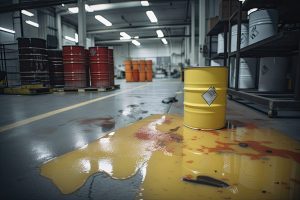
CHEMICAL-RELATED incidents account for a significant share of workplace accidents in food and beverage manufacturing. From caustic detergents and aggressive sanitising agents to ammonia refrigerants and concentrated reagents used in testing labs, food facilities rely on chemicals that can cause serious harm if something goes wrong.
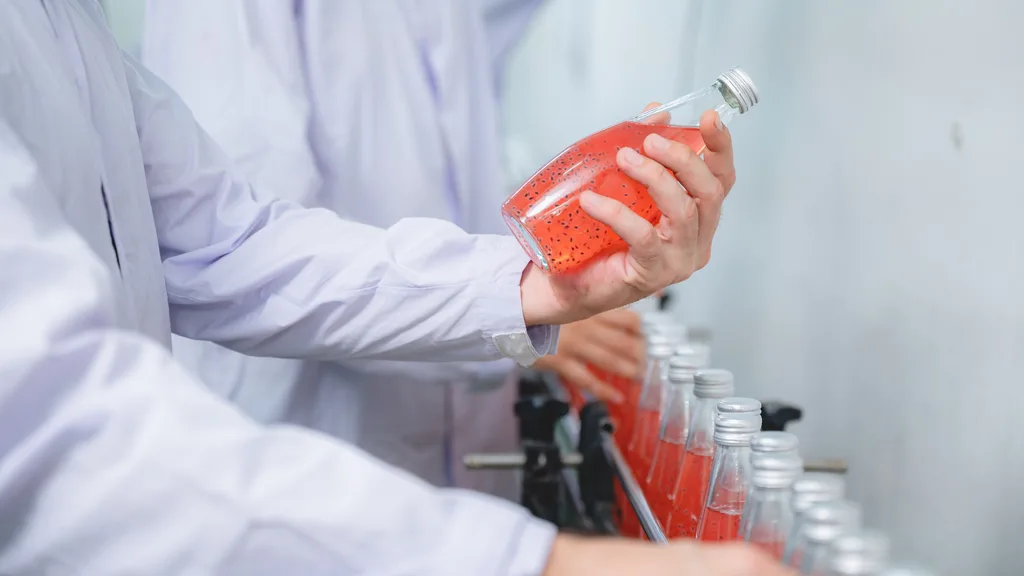
Food production environments are uniquely demanding. High hygiene standards, frequent washdown, tight turnaround times and regulatory scrutiny mean chemicals are handled daily, often under pressure. While these processes are essential for food safety, they also increase the likelihood of splash incidents, leaks or accidental contact if controls fail or procedures slip.
In a food or beverage facility, chemical hazards arise from routine processes designed to protect hygiene, maintain equipment and keep production running. The risk comes from how workers interact with chemicals and how easily a routine task can turn into an exposure incident.
The most common sources of chemical hazards in food and drink manufacturing include:
- Cleaning and sanitising agents
- CIP chemicals
- Refrigerants
- Process chemicals and reagents
- Lubricants, solvents and maintenance chemicals
- Residues, incompatible mixing and by-products
When chemical exposure occurs in a food or beverage facility, the effects on workers can be immediate and severe. Many substances used in production are corrosive, irritating or harmful on contact and even a momentary splash from one of these dangerous chemicals can lead to injury.
The most common injuries include:
- Chemical burns to skin and eyes, including tissue damage
- Irritation or injury from vapours and aerosols
- Acute reactions from accidental over-concentration or incompatible mixing
- Secondary injuries during and after exposure because of slippery floors, impaired vision, panic or disorientation
The severity of injuries depends on how quickly flushing begins. The faster a chemical is washed from the skin or eyes, the less severe the injury is likely to be.
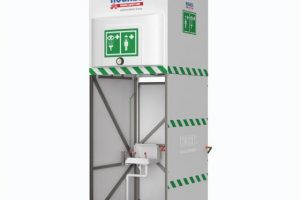
Emergency showers and eyewashes
When chemical exposure occurs in a food processing environment, the difference between a minor injury and a life-altering one is often measured in seconds. Emergency showers and eyewash stations are the frontline of protection when workers come into contact with hazardous substances.
Incidents in food and beverage facilities typically happen fast and without warning. Because chemicals act immediately on contact, rapid washing is the only effective way to limit the severity of injury. A worker who can begin flushing within seconds stands a significantly better chance of reducing chemical penetration and preventing deeper tissue damage.
To ensure that emergency decontamination equipment works as needed during an incident, it must meet specific performance expectations laid out by the standards EN15154 and ANSI Z358.1. Requirements typically cover:
- Tepid water provision to prevent thermal shock and encourage full 15-minute flushing
- Clear accessibility, with equipment located close to chemical handling areas and unobstructed routes
- Regular testing and maintenance to ensure consistent flow, reliable activation and clean water delivery
- Visible signage and lighting so stations can be identified instantly, even under stress
- Protective covers or lids for eyewashes to prevent contamination
These standards exist because inadequately maintained or poorly located equipment can delay decontamination, undermining the purpose of the installation.
Chemical hazards are an unavoidable part of modern food and beverage production, but serious injuries don’t have to be. By understanding where these risks arise, recognising the substances that cause harm and putting strong preventive controls in place, food manufacturers can significantly reduce the likelihood of exposure. Yet even the best procedures and training cannot remove risk entirely; unexpected splashes, leaks and contact incidents can still occur in the busiest, most well-managed plants.
When they do, the outcome depends on one crucial factor: how quickly workers can begin decontaminating the affected area. Emergency safety showers and eyewash stations provide that immediate lifesaving response. Positioned correctly and maintained in line with standards, they give teams the confidence that help is never more than a few steps away and that a moment’s exposure won’t become a lasting injury.
For more information, visit www.hughes-safety.com


HSM Newsletter
HSM publishes a weekly eNewsletter, delivering a carefully chosen selection of the latest stories straight to your inbox.
Subscribe here