
From slopes to sites
CHRIS ELLERBY looks at how action sports, test pilot technology and materials science are coming together to move head protection technology forward.

There are many, many HSM readers I am sure who love skiing, mountain biking and road biking. The great outdoors, the feelings of speed and exhilaration are a welcome release from the stresses and strains of the working day and the intrusive technology of modern life. But, of course, to pursue your hobby safely you need the appropriate safety equipment, such as a helmet, and it has got to do the job, be comfortable and (let’s not pretend otherwise) look good. To this end, many of us invest in the latest state of the art protective kit and do everything we can to reduce our risk of injury.
Unless you are extremely fortunate, you’ll spend much more time at work than pursuing your action sports hobby, so why then do many people when working still tolerate head protection, hard hats, that have not changed that much since they were introduced in 1919 when there are so many advances in head protection technology in other sectors?
The question as to why hard hats used in the industrial and construction sectors were so dated was one that bugged Ryan Barnes a great deal. He founded STUDSON in 2020 to bring safer and more innovative head protection to the industrial safety market. STUDSON set out to develop better PPE for the ‘industrial athlete’ (as they termed them). Looking back to his previous experience in protective equipment for action sports Ryan Barnes knew there were some technical developments that could be brought across from sports helmets into industrial products that would be a good fit for the construction, utilities, power generation and oil and gas environments.
EPS is not the only answer
To be fair, Ryan Barnes’ assertion that the hard hat had not changed much since 1919 had a little creative licence about it. Industrial helmets had widely adopted Expanded Polystyrene (EPS) material within them which did provide the wearer with more advanced protection as EPS is a rigid, tough, closed cell foam made from pre-expanded polystyrene beads that absorbs energy and retains heat. However, there was much more advanced technology on the market than just EPS, and it was those materials that Barnes wanted STUDSON to explore.
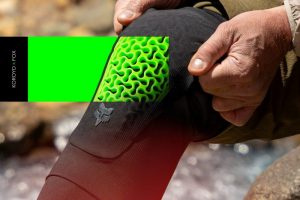
One such material was KOROYD, an impact protection material which had been introduced into a series of award-winning ski and cycle helmets from 2013 onwards. KOROYD’s impact protection technology is a series of thermally welded co-polymer tubes designed to crumple instantly on impact, efficiently absorbing force while remaining lightweight and highly breathable. The technology has an interesting background that can be traced back to a British aviation research project that was initiated to reduce the risk to aircraft passengers in the event of a crash. KOROYD’s energy absorption properties can be altered based on tube diameter and material density.
Each tube in a KOROYD panel is extruded as a dual-layer polycarbonate tube with a wall thickness of just <0.06mm. The interior tube is slightly thicker and provides structure, while the outer layer is much thinner and melts at a slightly lower temperature. Those tubes are then bundled together; hot air is passed through the network, and that outer layer fuses together to form a unified structure. Creating the ‘honeycomb’ in this fashion not only omits conventional adhesives and glues that can often serve as weak points, but also retains each tube’s geometric structure, which is critical to the material’s energy absorption properties. KOROYD head protection technology is extruded as long tubes and formed as giant blocks. From there, it can be sliced as needed depending on the application and thermoformed into complex shapes.
There are many features and benefits of the KOROYD material that make it highly suited for PPE.
Firstly, laboratory tests have found that when an impact occurs that its material compresses up to 73% vs foam materials such as EPS which, when tested in the same way, only compress up to 56%. This means that the KOROYD material is potentially 42% more efficient at absorbing the energy of an impact.
Secondly, KOROYD provides a visual end of life indicator to easily demonstrate if products that use it are safe, or unsafe, for use. When an impact occurs, the welded tubes deform into a distinct compressed pattern which is clearly visible on inspection. This indicates that the helmet has been compromised and needs to be replaced. EPS and other foams give no such visual indication when they are compromised and therefore it’s much more difficult to know when a product needs replacing.
Thirdly, KOROYD’s mechanical properties are constant for temperatures ranging from -5°F to +122°F (-20 to +50°C). By comparison, foams like EPS perform inconsistently at extreme temperatures, either softening or hardening. Plus, in relation to temperature, the tubular geometry has secondary benefits as channels between tubes allow air to flow, which improves cooling and reduces sweat accumulation, a major comfort factor for workers in hot climates. KOROYD’s tubular structure is 95% air; it allows humid air to dissipate and be displaced by cooler air. This can reduce the temperature inside a safety helmet by up to 4.5C or 80F for a crown and off crown protective Type II helmet. This improved cooling brings a behavioural benefit as by reducing heat stress; the material helps prevent short term removal of PPE, which is often when accidents occur.
On the practical front, one other factor is the material’s ability to enable more compact, lower profile and lighter weight helmet designs. This provides a reduction in ride height and results in a sleeker, more practical helmet. These benefits, plus the heat stress reduction properties, have been taken advantage of by jet fighter pilots in the US Airforce where the introduction of the KOROYD material into the next generation fixed wing helmet is helping reduce Musculoskeletal disorders from extreme G forces and weight and helps extend the service life of military personnel.
In addition, KOROYD’s welded tubes crumple instantly and consistently on impact, absorbing maximum force in a controlled manner, minimising energy transferred to the wearer’s head. Traditional energy absorbers act like a spring (elastic), storing the energy from an impact and releasing it over a micro-moment of time. Due to this, more energy could be transferred to the head, increasing the risk of injury. When KOROYD is impacted, energy is better absorbed through sacrificial plastic deformation. The material acts as a true energy absorber rather than a spring, crumpling, absorbing, and protecting the wearer.
Brought together by these and other performance quality indicators KOROYD and STUDSON introduced the SHK-1 helmet in May 2021. They would go on further to introduce the First ANSI Z89.1 Type II-Rated Full Brim Safety Helmet (SHK-1 FB) in June 2023 and currently these helmets are undergoing EN397:2025 certification and will soon be available in Europe.
Enhanced wearer experience
There is something satisfying about the idea that technologies developed for use by elite athletes now protect people on construction sites and in industrial settings. Historically, sports equipment has driven advancements in protective design because performance and comfort are highly valued by athletes and general consumers. Those same priorities are vital for PPE where compliance and wearability determine not only whether the product actually works but vitally if it remains in place.
Adopting sports technology in industry is not merely a branding exercise; it represents a shift in safety culture. When a hard hat is comfortable, workers are more likely to wear it and if it looks good then all the better so that people feel less self-conscious and aware they are wearing PPE. This cross-pollination helps close a longstanding gap in occupational safety: protective equipment must protect and be suitable for long-term, real-world use.
With materials such as KOROYD already being incorporated into PPE for industrial use, there’s no reason why the helmets that workers are using across the UK shouldn’t perform as well, in every aspect, as their action sport counterparts. Perhaps, as when they are buying for themselves, safety professionals and end users might ask a few more questions about the materials being used in their PPE and ask a little more from their suppliers – whether that’s helmet manufacturers or distributors to provide ‘high performance’ technology and not ‘adequate performance’ equipment. With the STUDSON SHK-1 soon to achieve European Certification, such equipment will shortly be available to UK businesses.
Chris Ellerby is director of industrial safety at Koroyd. For more information, visit www.koroyd.com

Related posts

HSM Newsletter
HSM publishes a weekly eNewsletter, delivering a carefully chosen selection of the latest stories straight to your inbox.
Subscribe here