



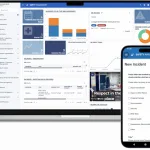

The integration driver
DISCONNECTED SAFETY systems create hidden risks. Jose Arcilla explores how to build a proactive, prevention-focused safety management approach that actually keeps people safe.

Here’s a scenario I see play out all too often. A major incident happens at a site. The safety manager needs answers fast: What training did this person have? Were there near misses we should have spotted? What’s happening with contractors on-site right now?
With disconnected systems, getting those answers can take hours. Sometimes days. One system has incident data. Training records live somewhere else. Contractor compliance? That’s in a third system. Risk assessments? A fourth. And whilst you’re hunting through all of this, critical response time is ticking away.
I’ve watched this situation unfold across organisations globally and often hear it from EHS professionals: our systems don’t talk to each other. It’s not just frustrating. It’s creating genuine hidden risks that undermine everything you’re trying to achieve with your safety programme.
What you can’t see will hurt you
One of the biggest risks is what remains hidden. When incident data, training records, audit findings and risk assessments exist in separate systems, trends and patterns are not obvious. I’ve seen near misses across different sites that shared the same root cause, but nobody spotted the pattern until all the data was in one place.
Consider psychosocial risks, now accounting for close to half of workplace ill-health cases in the UK according to HSE data. These psychosocial risks are closely linked with physical safety. Elevated stress levels are associated with higher incident rates and exposure to physical hazards can increase psychological strain. But if your psychosocial data is in HR systems whilst your physical safety data lives in your EHS platform, you’ll never see these crucial connections.
Speed counts when every second does
Speed is critical when something goes wrong. You need to understand context quickly, implement controls and communicate action effectively. I’ve heard of investigations where someone had to log into four separate systems and manually compile everything into spreadsheets before they could even start analysing what went wrong. By the time they had a clear picture, the opportunity for immediate corrective action had passed. That’s not acceptable — but it’s the reality of fragmented systems.
Compliance is getting harder
Regulators are raising the bar. You are expected to demonstrate how your training programmes address identified risks, how incident trends inform your risk assessments, and how you manage risks systematically.
Take the new HSE guidance on psychosocial risks as an example. You need to show how you identify hazards, assess risk levels, implement controls, and review data continuously.
If that information is scattered (employee surveys in one place, incident reports in another, training records somewhere else), demonstrating systematic management becomes extremely challenging. This not only makes it difficult to support your teams and champion a positive work environment, but it also means organisations may be less prepared to respond effectively to new challenges as they emerge.
What real integration looks like
The good news is that integration helps solve these challenges systematically. And it’s not just about connecting systems through APIs. It’s about having all your safety data in one place, with workflows that span multiple functions seamlessly. A single source of truth.
Things start happening automatically
When incident management, training, compliance tracking, audits, and contractor management are genuinely integrated, powerful workflows become possible.
An incident gets reported. The system automatically triggers a training requirement based on what happened. A failed audit item generates corrective actions and assigns them. A contractor shows up on-site, and their competency gets verified instantly against what’s required for the job they’re doing. These are automated workflows that help ensure nothing falls between the cracks.
Everyone sees the same picture
When a safety manager looks at an incident, they immediately see the training history, previous near misses, relevant risk assessments, and procedures. Not because they’re skilled at searching through multiple systems. Because the information is connected. Incidents, training completion, audit compliance, contractor management. You can spot which sites need support. Where risks are emerging. Whether your interventions are working.
You can finally see patterns
When all your safety data exists in one place, you can start seeing patterns and perhaps discover what was always there. Training gaps that correlate with specific incident types. Incidents that spike after certain shift changes. How equipment maintenance cycles affect safety performance. The connection between psychosocial factors and physical safety outcomes.
This is where AI can genuinely add value. Not making decisions for you, but working collaboratively with safety teams, analysing massive datasets to surface patterns and make recommendations. But AI only works when it has access to complete data.
Two converging pressures
Understanding why integration matters is one thing. Understanding why it’s becoming urgent is another. Two major shifts are making disconnected systems increasingly unworkable.
- The workforce has changed
The traditional safety model was built around permanent, full-time employees working in fixed locations. That world is changing rapidly. Now you’ve got contractors, subcontractors, seasonal workers, gig workers, remote workers, hybrid workers. Each group has different training needs, different compliance requirements, different risk profiles.
For contractors especially, you need real-time competency verification. Not annual training cycles. You need to know right now, as someone’s about to do a high-risk task, that they have the required training and certifications. When contractor management lives in a separate system from your training records, that verification becomes a manual, time-consuming process.
- Regulations keep evolving
Particularly around psychosocial safety and mental health. The old approach of managing physical safety in one system and everything else scattered elsewhere simply doesn’t work when regulators expect you to demonstrate overall risk management — including psychosocial safety. The traditional model of separate systems for physical and mental health data simply doesn’t cut it. I see safety professionals drowning in data but starving for insight. Integration changes that.
Getting from here to there
Most organisations can’t pivot their current safe systems of work overnight. But what they can do is repurpose their strategy towards integration.
How to get there
Map your landscape. Where does your safety data live? How many systems are you using? Where are the gaps? What manual processes are you running to bridge disconnected systems? Identify the manual bridges and blind spots — then determine which integrations would deliver the most value.
Start where integration delivers the greatest impact. For many organisations, connecting incident management with training management is a high priority — ensuring incidents automatically trigger the right training responses. For others, such as Main Contractors or Principal Contractors (PCs), contractor management integration is often critical to managing supply chain compliance. There’s no single, one-size-fits-all approach.
Test whether integration is real
When you’re evaluating platforms, don’t just trust the sales pitch. Test it. Can an incident trigger a training action automatically? Can you see a complete picture of contractor compliance (training, certifications, incident history) in one place? True integration means the system handles the connections, not you.
Think about the people using it
The most sophisticated platform in the world is worthless if people won’t use it. Test the end-user experience thoroughly. Proactive safety work is enhanced in the field and if your system isn’t mobile-friendly, adoption will suffer.
Evaluate whether interfaces are intuitive enough that they require minimal training. I’ve seen integration projects fail because systems are clunky or complicated, so people find workarounds and stop reporting things. Make the process simple and central so people want to use it.
Bring people along
Technology change is behaviour change. You need to explain the ‘why’. Train people properly, engage them in the process early and demonstrate value quickly. Early wins matter enormously. If integration immediately makes someone’s job easier, they become your advocate.
Why this matters
I grew up in Aylesbury, and my mum was a nurse at Stoke Mandeville Spinal Injury Unit. As a kid, I’d go to Friday night movies they ran for patients. I met people from across the UK whose lives had changed in an instant, a normal workday that ended in a life-altering injury.
That memory stayed with me.
Every time we talk about disconnected systems, data silos and integration challenges, I try to remember that. Because it isn’t really about IT efficiency, it’s about the person who might get hurt because we couldn’t see the underlying patterns and causes. Because a near miss wasn’t reported. Because a training gap went unnoticed.
Integration is how organisations move from reacting to incidents to preventing them. When systems are connected, teams focus on prevention instead of paperwork. Data becomes reliable. Everyone sees the same information. Response is fast because context is immediate. And you can spot the connections and patterns that let you prevent incidents rather than just investigating them afterwards.
The question isn’t whether to integrate. It’s how quickly you can make it happen. Because every day you operate disconnected systems is another day of hidden risks undermining everything that you are working to protect. Integration isn’t just about efficiency. It’s how you build proactive, prevention-focused safety management that actually keeps people safe.
Jose Arcilla is CEO at HSI. For more information, visit www.donesafe.com
Related posts


HSM Newsletter
HSM publishes a weekly eNewsletter, delivering a carefully chosen selection of the latest stories straight to your inbox.
Subscribe here