


Most common causes of scaffold tower accidents
SCAFFOLD TOWERS remain one of the most commonly used types of access equipment across construction, facilities management, warehousing and maintenance. Despite their widespread use, they are still associated with a significant number of avoidable incidents each year.
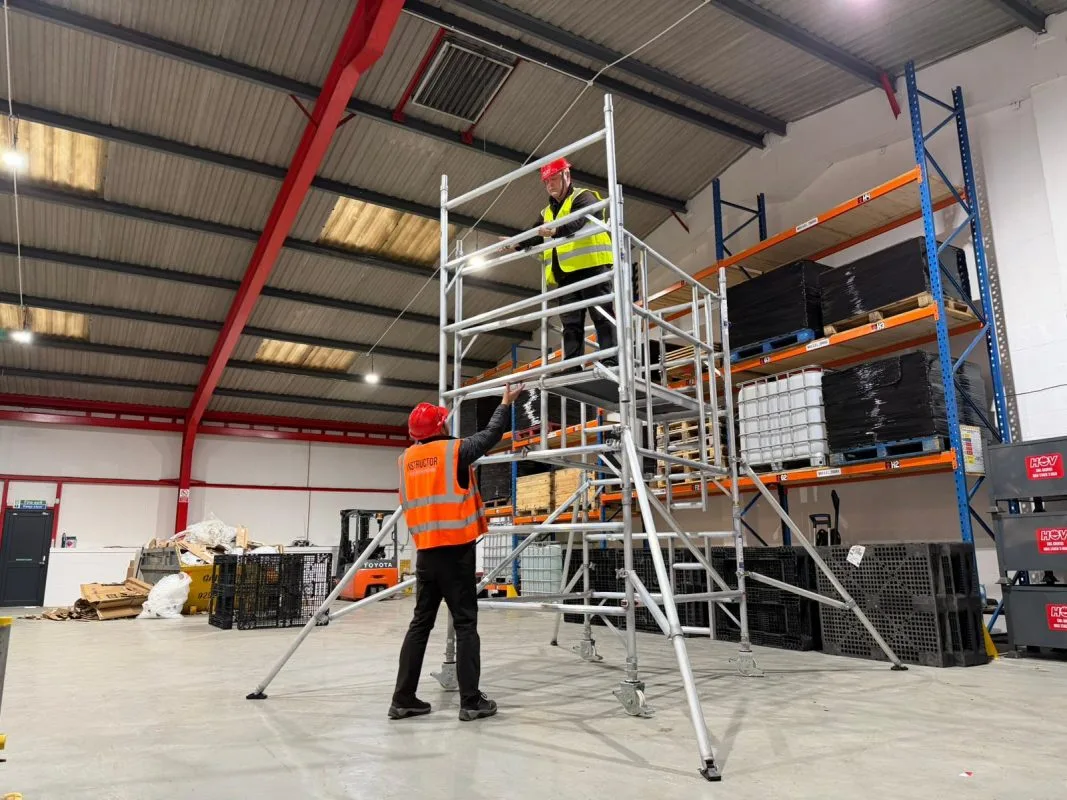
SCAFFOLD TOWERS remain one of the most commonly used types of access equipment across construction, facilities management, warehousing and maintenance. Despite their widespread use, they are still associated with a significant number of avoidable incidents each year.
As highlighted in HSM coverage of PASMA Tower Safety Week, issues such as improper assembly, inadequate inspections and insufficient user competence continue to feature prominently in accident investigations.
Most tower-related accidents share the same root causes. By understanding why they occur and implementing simple, structured preventive measures, employers and duty holders can dramatically reduce risks and improve site safety.
Incorrect assembly – the leading cause of tower failures
Incorrect or incomplete assembly remains the most common factor in scaffold tower accidents. Missing braces, wrongly positioned platforms, inadequate guardrails or incorrectly fitted stabilisers can all leave a tower structurally unsound before work even begins. In more severe cases, this can lead to sudden collapse.
This was highlighted in HSM report on PASMA’s response to an HSE unsafe tower prosecution, where a tower had been erected without essential components. PASMA — the industry’s recognised authority, emphasised that correct assembly using approved methods is essential to prevent such failures.
PASMA’s own guidance, including the 3T (Through The Trap) and AGR (Advance Guard Rail) methods, provides safe and practical procedures for assembly in line with current standards. Their official resources can be found at PASMA’s official website.
How to prevent it:
- Only trained and competent individuals should assemble towers
- Follow manufacturer instructions at all times
- Never mix components from different systems
- Ensure all guardrails, stabilisers and braces are fitted correctly
Unsafe or uneven ground conditions
Even a correctly assembled tower can become dangerous if erected on unstable ground. Soft surfaces, uneven floors, slopes or drainage covers can lead to instability or sudden movement. Indoors, issues such as expansion joints or raised thresholds can create similar hazards.
A tower’s stability is highly dependent on a level, firm base. If just one castor is positioned incorrectly, the entire structure may become vulnerable.
How to prevent it:
- Conduct a ground assessment before erection
- Adjust the legs to ensure the tower is level
- Avoid makeshift packing like bricks or timber
- Keep towers away from slopes, drains and voids
Overreaching while working at height
Many incidents occur not because the tower is unsafe, but because the user adopts an unsafe position. Overreaching, such as leaning out too far to reach work, is one of the most common behavioural causes of tower accidents. This shifts the centre of gravity and increases the risk of tipping.
How to prevent it:
- Move the tower regularly rather than stretching
- Maintain proper guardrail protection
- Keep both feet on the platform
- Position the tower close to the work area
Exceeding safe working load limits
Every scaffold tower and platform has a designated load rating. Exceeding these limits by adding too many materials, tools or personnel can compromise structural integrity. Overloading can cause excessive platform deflection or premature component failure.
How to prevent it:
- Know the load classification of your tower
- Avoid storing materials at height
- Limit the number of users on a platform
- Choose a tower suited to the task
Ignoring weather and environmental conditions
Working outdoors increases exposure to environmental hazards. High winds, rain, ice and sudden gusts can create unsafe conditions, especially for tall or narrow towers.
How to prevent it:
Follow manufacturer wind-speed limits (often around 17mph)
- Avoid using sheeting or coverings
- Cease work in adverse weather
- Use additional stabilisation where required
Inadequate inspections and missed pre-use checks
A significant proportion of tower accidents could be prevented through proper inspection routines. Towers should be checked after assembly, before use, after any adjustment and at appropriate intervals throughout the working shift.
Common faults found during inspections include:
- Missing or damaged braces
- Seized locking claws
- Worn or cracked platforms
- Loose guardrails
- Misaligned frames
How to prevent it:
- Conduct pre-use checks every time
- Inspect all critical components
- Use tower tags where appropriate
- Remove damaged components from service immediately
Lack of competence and training – the root of most preventable accidents
Behind nearly all tower accidents lies one underlying issue: lack of competence. Mobile scaffold towers may appear simple, but they require knowledge, understanding and confidence to assemble, adjust and use safely.
To gain practical insight into the challenges users face, we spoke with HOV Training, a work-at-height specialist offering accredited courses across the UK. HOV Training recently opened their PASMA approved training centre, and their instructors highlighted several recurring issues they encounter during training sessions and workplace assessments.
According to HOV training:
Incorrect stabiliser use remains one of the most common problems. Many users fit stabilisers at the wrong angle or fail to deploy them fully, significantly reducing resistance to side-loading.
Mixed-component towers continue to appear on worksites, where frames and braces from different manufacturers are combined. Even small dimensional differences can compromise tower stability.
Improper platform placement is frequently observed, with platforms fitted onto rungs not designed to bear load, creating hidden structural weaknesses.
Missed inspections are widespread. Many users do not realise that towers require inspection after every move or adjustment, not just at the start of the day.
These insights reinforce PASMA’s core message: competence is the strongest defence against avoidable tower accidents, and proper training remains essential for those assembling or working on mobile access towers.
Conclusion
Mobile access towers are invaluable across many industries, but they must be used with an understanding of the risks involved. Incorrect assembly, unsafe ground, poor weather, overloading, inadequate inspection and lack of competence continue to account for most tower-related incidents and all of them are preventable.
By following established guidance, implementing structured safety checks and ensuring operators receive recognised training from organisations such as PASMA and accredited centres like HOV Training, employers can significantly reduce risk and create safer working environments.
HSM Newsletter
HSM publishes a weekly eNewsletter, delivering a carefully chosen selection of the latest stories straight to your inbox.
Subscribe here