


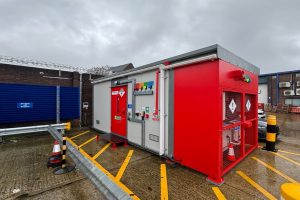
Lithium-ion storage boom sparks safety concerns
THE UK’S lithium-ion battery market is expanding quickly. Alongside it, a wave of storage and charging solutions is entering the market but lithium-ion battery storage is rarely a straightforward purchasing decision, cautions Mike Brodie.
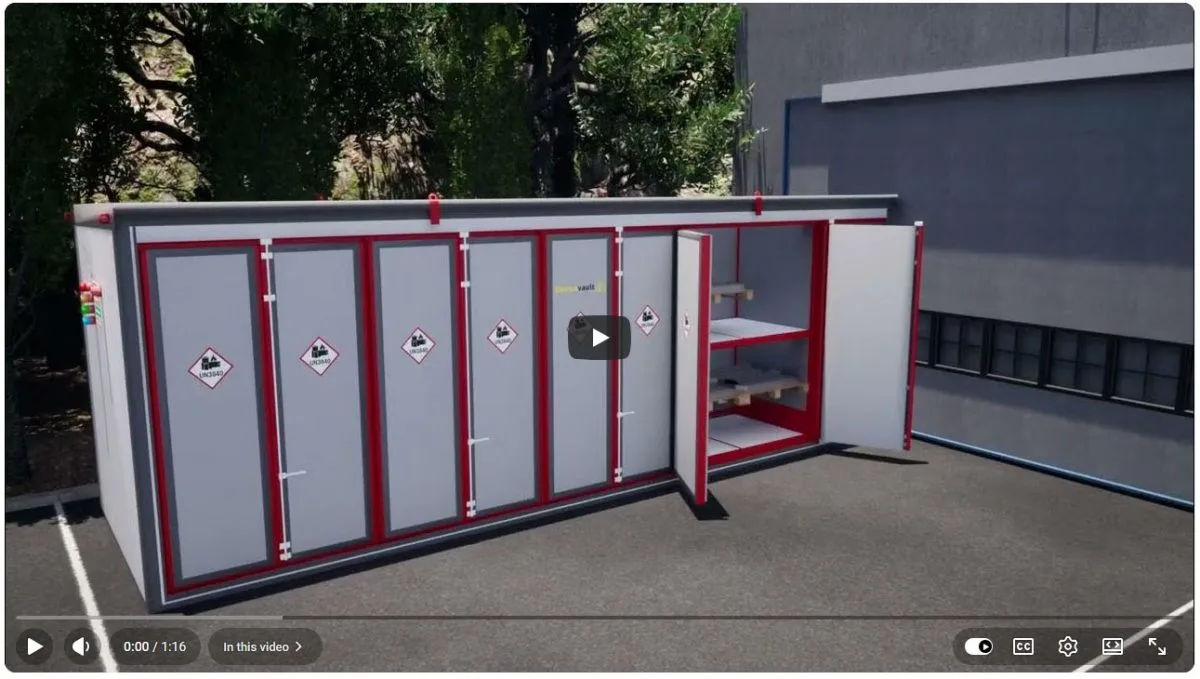
Book a free lithium-ion battery storage review today.
Cabinets, containers and modular units are being presented as practical answers to a growing safety challenge.
This looks like progress. In many ways, it is. But the pace of product development is beginning to outstrip the level of understanding needed to use these systems safely.
This is not a criticism of innovation. It is a reminder that not all solutions are equal, and not all are suited to every environment.
A complex risk, often simplified
Lithium-ion batteries behave differently from conventional hazards. When they fail, they can enter thermal runaway, a fast and self-sustaining reaction that is difficult to control and capable of re-ignition.
The level of risk also varies significantly. A few small batteries in good condition presents a very different challenge to damaged units, high-energy packs or high-throughput charging operations. Yet many products are marketed in ways that suggest they can cover all scenarios.
The effectiveness of any system depends on how well it reflects the specific risk it is meant to manage.
Similar claims, different outcomes
Common terms appear across the market. Fire-rated, ventilated and suitable for charging are widely used. These descriptions can mask important differences.
Ventilation is one example. Some systems rely on passive airflow through openings. Others use controlled systems that respond to detection and changing conditions.
Detection is another. Lithium-ion batteries often release gases before a failure escalates.
Systems that detect these gases and interrupt charging can prevent an incident from developing. Systems based on heat or smoke detection respond much later.
These differences are not always clear at the point of purchase, but they have a direct impact on safety.
Containers require careful design
Shipping containers are widely used as a basis for lithium-ion storage. They are available and robust, which understandable makes them an attractive option but they also introduce challenges.
Steel structures are prone to temperature extremes. Internal conditions can become very hot in summer and very cold in winter even with modifications. Charging batteries in these environments increases stress on the cells and raises the likelihood of failure.
Ventilation, fire protection and internal layout all require careful consideration. Without that, the structure itself can contribute to the risk.
These spaces are occupied by people
Lithium-ion storage systems are often not isolated assets. They are environments that people enter and work in. Engineers carry out inspections. Staff handle batteries and maintenance teams respond to issues all of which bring additional considerations.
Gas build-up can lead to oxygen depletion or create a flammable atmosphere. Without appropriate safeguards such as gas detection, traffic light warning systems, panic alarms and controlled access, there is a risk of people entering unsafe conditions. This is a fundamental design issue, not an optional feature.
Specification needs a broader view
Despite the complexity, lithium-ion storage is still sometimes treated as a straightforward purchasing decision. In reality, it requires input from multiple stakeholders. Fire risk assessors, DSEAR specialists, insurers, engineers, operations teams and even local fire services have a role to play and should ideally be consulted during the specification process. Each provides a different perspective on how a system will perform in practice and how it will be used day to day. At Chemstore UK we recommend and facilitate this approach but it is not yet consistent across the market.
A growing market needs informed decisions
The sector continues to develop. Guidance is improving, but it is not fully established. This places greater responsibility on those selecting and specifying systems. Products that appear similar can deliver very different levels of protection.
Understanding those differences is essential. Chemstore UK is an award-winning specialist, and BSIF Registered Safety Supplier, trusted by leading brands across multiple sectors to assess risk and design practical, compliant solutions.
Speak to an expert today to review your approach and ensure it reflects the realities of your operation.
Mike Brodie is managing director of Chemstore UK. For more information, visit www.chemstore.co.uk
Related posts

HSM Newsletter
HSM publishes a weekly eNewsletter, delivering a carefully chosen selection of the latest stories straight to your inbox.
Subscribe here