


How to select noise measurement equipment
The importance of noise control in the working
environment is becoming an increasingly recognised
and widely discussed issue but selecting suitable noise
measurement equipment can often be a daunting
process. James Tingay
The importance of noise control in the working
environment is becoming an increasingly recognised
and widely discussed issue but selecting suitable noise
measurement equipment can often be a daunting
process. James Tingay offers some pointers
According to HSE statistics about
1.7 million workers are thought
to be exposed to noise above
levels considered safe and it is estimated
that around 21,000 individuals who
worked in 2009/2010 suffered hearing
problems as a result of their occupation.
In an attempt to reduce this level of
hearing damage, noise legislation
designed to protect hearing and prevent
noise nuisance is becoming tougher and
more widespread. As a result of this the
importance of noise control in the
working environment is becoming an
increasingly recognised and widely
discussed issue and employers are
expected to measure the level of noise in
the workplace so that appropriate
preventative action or protective
equipment can be introduced.
But noise measurement equipment is
needed to carry out this activity and with
so many choices of equipment available
and with prices ranging from twenty
pounds to five thousand pounds, deciding
which one to buy can be very confusing
and expensive if the wrong choice is
made. To simplify this process Cirrus
Research has produced an eight point
guide with advice on how to ensure you
choose the best noise measurement tools
for your application, and also outlines
some of the issues that need to be
considered even after the equipment has
been purchased.
Step 1
Do the measurement functions comply
with Standards, Regulations or
Guidelines?
The Control of Noise at Work
Regulations 2005 requires the following
measurements for compliance:
1. The equivalent continuous Aweighted
sound pressure level (LAeq)
2. The maximum C-weighted peak
sound pressure level (LCPeak)
It is important that you have the right
sound measurement equipment for the
right situation. There are many situations
where using a handheld sound level meter
is not possible for both practical and
safety reasons, such as employees with
complex working patterns. This is where a
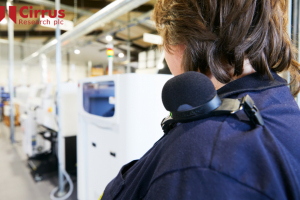
noise dosemeter is the ideal measurement
tool because they can be worn for the
whole working shift continually
measuring the noise levels and no further
calculations will be required.
Step 2
Does the equipment come with all of the
accessories required?
It is always advisable to purchase a
sound level meter or noise dosemeter as a
complete kit and avoid combining units
from different manufacturers. In general
the kit will contain the instrument, a
suitable acoustic calibrator, a windshield
and a protective carrying case. One of the
most important accessories is an acoustic
calibrator. All noise measurement
standards state that an instrument must
be calibrated before and after each use
and without an acoustic calibrator, this
cannot be done and therefore any
measurements made could be inaccurate.
The windshield will help protect the
microphone from damage, even indoors.
Step 3
The importance of recalibration and
servicing
Noise measurement instruments are
precision tools, and the level of accuracy
required from them is very high.
Reputable manufacturers spend
considerable time and effort to ensure
their instruments meet these standards,
therefore it is important to keep the
equipment at the level of accuracy as
when it was purchased. An instrument
from a trusted manufacturer and meeting
the latest standards should come with a
calibration certificate and when
recalibrated its performance should be
checked against the original specifications
and standards. To do this an acoustic
calibrator cannot provide enough
information about the instrument’s
performance as the microphone capsule
needs to be removed. With many low cost
instruments the microphone cannot be
removed, therefore the recalibration
should be carried out by the original
manufacturer or by a qualified calibration
laboratory.
Step 4
Does the equipment meet the
specifications required?
The performance of sound level meters,
noise dosemeters and acoustic calibrators
are set out in national, European and
international standards. The latest sound
level meter standard gives two levels of
accuracy, Class1 and Class2. The Control
of Noise at Work Regulations 2005, which
are in force in the UK, states that with
regard to sound level meters “Your sound
level meter should meet at least Class 2 of
BS EN 61672 – 1:2003. Personal noise
dosemeters have their own standard with
which they must comply, which is BS EN
61252:1997.
Step 5
Making sure the equipment comes with
clear instructions
The level of training and experience
required to operate complex sound level
meters can often get in the way of making
good quality noise measurements.
However, a simple instrument that may
require less training to operate, might not
give enough accurate measurement. An
expensive instrument may provide the
data required, however the level of
training needed could be expensive too.
Therefore, it is recommended to choose
an instrument that meets your practical
requirements whilst keeping the
instrument as simple as possible and the
cost realistic.
Step 6
Make sure the equipment is simple to
use, straight out of the box
Ensure the product you buy is userfriendly.
Ideally you need a product that
enables you to see all of the relevant,
important information in one place
quickly, making it easier for you to report
on your measurements. At the very least
“on” and “off” buttons should be obvious
– it is concerning to note that on some
equipment, even these fundamentals are
unclear.
Step 7
Make sure the equipment is
“Futureproof”
When you are looking at different
manufacturers, ask some questions and
find out about how your investment will
be supported. A reputable manufacturer
should:
1. Regularly conduct research into noise
measurement regulations and
requirements to ensure they are kept
constantly up-to-date with changing
needs
2. Have an established Research and
Development team that ensures your
equipment contains the latest
functionality to meet all of your
requirements
3. Offer you free software updates so you
can continue to reap the benefits of
your equipment investment for years to
come
4. Provide equipment upgrades so you
can easily change the use of your
equipment without having to reinvest
in brand new hardware
Step 8
Does the equipment come with all the
software you need to get the best out of it?
Most noise measurement equipment
doesn’t come with reporting software as
standard. You may only get basic
downloading software supplied with the
instrument so check what’s included.
Putting together a report using your
findings can be time consuming so it is
advisable to ensure that the equipment is
supplied with full reporting software for
free as many providers charge a license fee
and this can prove very expensive.
For more information or to acquire
the full eight point guide please contact
Cirrus Research on the number below.
James Tingay is group marketing
manager at Cirrus Research.
Related posts

HSM Newsletter
HSM publishes a weekly eNewsletter, delivering a carefully chosen selection of the latest stories straight to your inbox.
Subscribe here