
Five key changes in head protection
THE HARMONISATION of EN 397:2025/AC:2025 in June 2026 marks an important change for industrial head protection. Replacing EN 397:2012, the revised standard introduces a new Type 1 and Type 2 classification, with Type 2 extending mandatory protection beyond on-crown impacts to include higher-energy and off-crown impacts, as well as new retention system requirements.
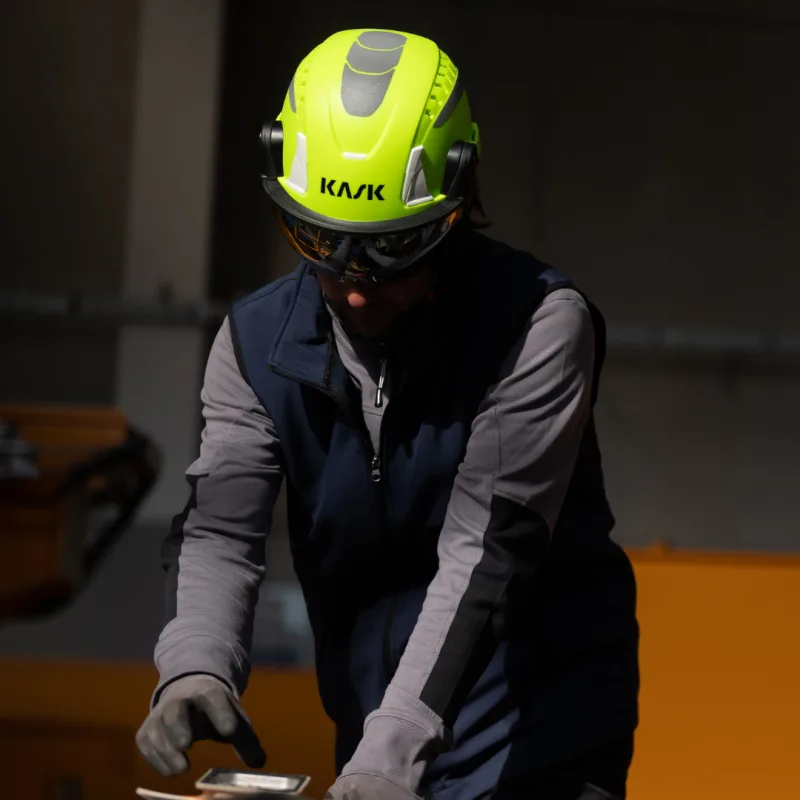
“This is much more than a technical update,” explains Bart Declerck, business development manager UK-IRE-Benelux at KASK Safety. “EN 397:2025/AC:2025 brings helmet testing closer to the real risks workers face, particularly through the introduction of off-crown impact protection and more stringent retention requirements.” The distinction between Type 1 and Type 2 also gives safety professionals a clearer framework for selecting protection according to different risk scenarios. “Type 2 goes beyond traditional and limited on-crown protection by addressing impacts from the front, rear and sides, from falls, slips and trips from lower heights where harnesses are not required on the jobsite, while introducing stronger chinstrap requirements to help keep the helmet securely in place.”
But the evolution goes further than impact protection. “The new standard takes a broader view of how a helmet performs in real working conditions. It introduces ergonomic assessments and additional requirements for specific applications, addressing factors such as extreme temperatures, electrical hazards, visibility, and off-crown penetration.”
Another significant development concerns the helmet as a complete protection system. “Workers rarely wear a helmet in isolation. Visors, earmuffs, headlamps, and other accessories are part of the everyday configuration. Under the new standard, accessories are considered as part of conformity testing, helping ensure that the complete configuration maintains the required level of protection.”
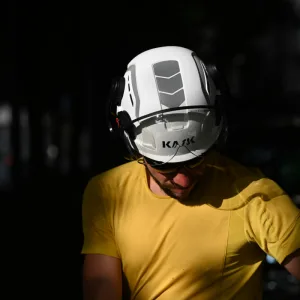 KASK contributed technical expertise to the working group involved in drafting the revised standard and is preparing its helmet collections for the new framework. “Contributing to the development of the standard also means taking responsibility for what comes next,” concludes Declerck. “EN 397:2025/AC:2025 is an important step forward for industrial head protection. KASK role is not simply to respond to new requirements, but to help turn them into better protection in the workplace and to give safety professionals the knowledge they need to make informed choices.”
Discover more about EN 397:2025/AC:2025 at KASK-safety.com

HSM Newsletter
HSM publishes a weekly eNewsletter, delivering a carefully chosen selection of the latest stories straight to your inbox.
Subscribe here