

The stakes are high
FALLS FROM height remain the UK’s leading cause of workplace fatalities, with the latest figures highlighting ongoing risks — particularly for the self-employed. Jamie Appleton explores how improved safety awareness, robust risk management, and the correct selection of PPE can help prevent needless deaths.
The latest statistics released by the Health and Safety Executive (HSE)* reveal that 124 workers were killed as a result of work-related injuries over the last 12 months. Whist this represents a reduction compared with the previous two years, the figure remains a stark reminder that significant risks persist across UK workplaces.
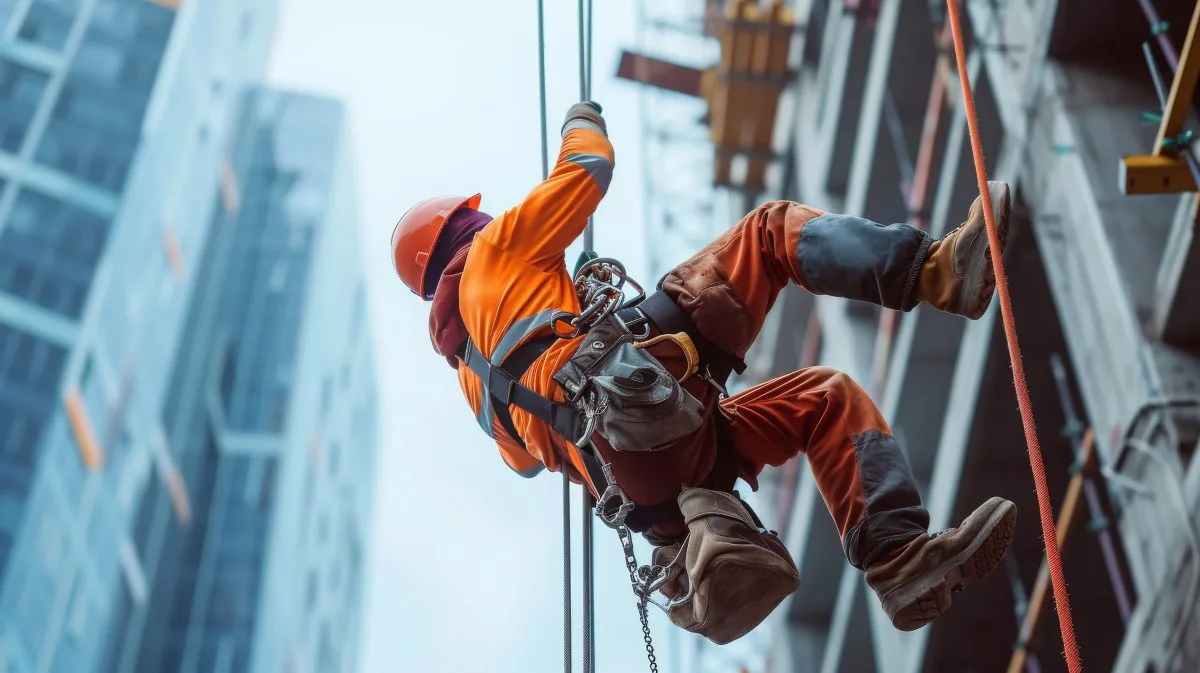
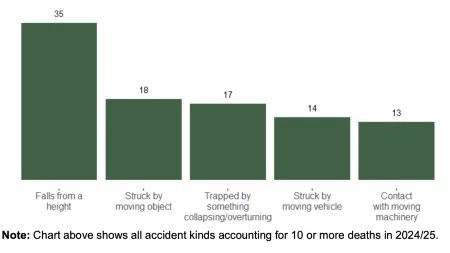
Falls from height continue to be the leading cause of fatal injuries, accounting for more than a quarter of all deaths. During 2024/25, 35 workers lost their lives following a fall from height. Alarmingly, over 65% of these fatalities involved self-employed workers. In total, 23 self-employed individuals were killed in falls from height, compared with 12 employees.
A further 18 workers died after being struck by a moving object, including impact injuries caused by falling tools and debris.
Although overall fatalities have decreased slightly, the loss of 124 lives underlines the continued need for improved safety awareness, robust risk management and the correct selection of personal protective equipment (PPE). By understanding workplace hazards, implementing appropriate control measures, and choosing suitable PPE, many of these incidents are preventable.
One area that often causes confusion is height safety PPE. With a wide range of harnesses and connecting devices available, selecting the correct equipment for specific tasks can be challenging. The following guidance outlines key considerations when choosing Personal Fall Protection Equipment (PFPE).
Full body harnesses
Full body harnesses are designed for use in both fall arrest and restraint systems and must meet the minimum standard of EN 361. Harnesses vary significantly in design, comfort, and price. Factors such as webbing type, adjustability and buckle design will influence user comfort and usability.
However, the most critical considerations when selecting a harness are:
- The number of attachment points
- The user weight limit
- The product lifespan
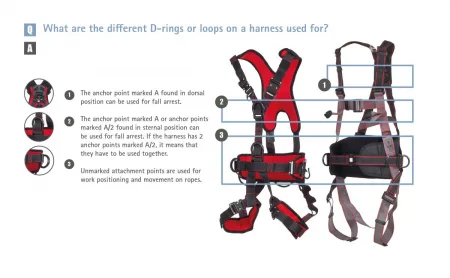
Harnesses are available with varying attachment configurations:
- 1-Point Harness – One dorsal (rear) attachment point.
- 2-Point Harness – Front and rear attachment points.
- 3- or 4-Point Harness – Front and rear attachment points plus a work positioning belt.
- 5-Point Harness – Front and rear attachment points, work positioning belt and a lower front attachment point for abseiling or rope access.
When selecting a harness, consider where the user will connect their lanyard during work. If the lanyard will always remain behind the user, a 1-point harness may be sufficient. However, if front attachment is required for certain tasks, a 2-point harness or higher specification will be necessary.
Fall Restraint vs Fall Arrest
When selecting an anchoring device, it is essential to determine whether the work can be carried out in fall restraint or fall arrest mode.
Fall Restraint
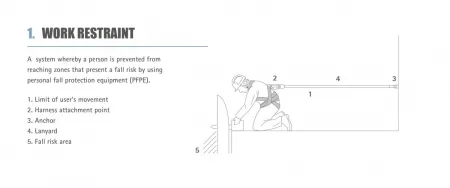
Fall restraint systems are designed to prevent a fall from occurring. The equipment restricts the user’s movement so they cannot reach the edge from which a fall could occur. Because the risk of falling is eliminated, restraint systems are always the preferred option where practical.
Restraint lanyards are available in fixed or adjustable lengths. Adjustable lanyards are generally recommended, as they provide greater flexibility across varying working environments.
Fall arrest systems are used where it is not possible to prevent exposure to a fall risk. In the event of a fall, the equipment activates to arrest the fall and reduce the forces exerted on the body to below 6kN.
The most commonly used fall arrest device is the fall arrest lanyard (EN 355), which incorporates an energy-absorbing pack. Inside the pack is approximately 1.75 metres of folded webbing stitched together. During a fall, the stitching tears in a controlled manner, allowing the webbing to deploy and dissipate energy, thereby reducing the force transmitted to the user.
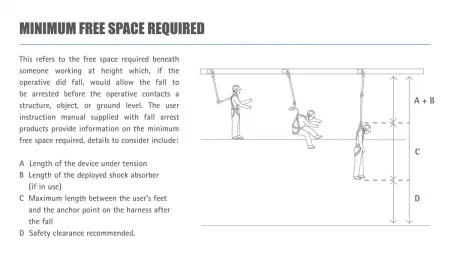
However, adequate fall clearance is critical. Consider the following:
- Typical lanyard length: 2 metres
- Potential deployment of energy absorber: 1.75 metres
- User height: 2 metres
- Minimum additional safety clearance: 1 metre
In total, at least 6.75 metres of clearance below the anchorage point is required for safe operation. A common mistake is failing to account for the deployment of the energy absorber, which can result in the user striking the ground before the system fully engages.
Where sufficient clearance is not available, alternative fall arrest solutions should be considered, including:
- Fall Arrest Blocks (EN 360) – Operate similarly to a car seatbelt, allowing free movement but locking instantly in the event of a fall. The typical fall distance is limited to approximately 2 metres.
- Vertical Rope and Grab Systems (EN 353-2) – Allow movement along a rope, with the grab device locking onto the rope if a fall occurs, again limiting fall distance to around 2 metres.
User instructions for lanyards

Self-Retracting Lifelines (SRLs)

Guided Type Fall Arresters

In all cases, user height and additional safety clearance must be factored into calculations.
Anchorage and connectors
Connectors are available in various configurations and must be selected based on the type of anchor point and connection method.
Common connector options include karabiners and scaffold hooks. In some cases, additional anchorage equipment such as anchorage slings or temporary horizontal lifelines may be required.
Karabiners are available with different locking mechanisms:
- Screw gate (manual locking)
- Double action (auto-locking)
- Triple action (auto-locking)
Triple-action karabiners provide the highest level of security, requiring three separate movements to unlock while automatically re-locking after use.
Karabiners are typically manufactured from either aluminium or steel. Aluminium offers reduced weight, improving user comfort, while steel generally provides greater durability and strength.
Conclusion
Although the number of workplace fatalities has fallen slightly, falls from height remain the single biggest cause of fatal injuries. Proper equipment selection, correct usage and a clear understanding of fall protection systems are essential to reducing risk.
If there is any uncertainty regarding equipment selection, always seek technical advice from a manufacturer or competent specialist. Professional guidance ensures that the chosen system is both compliant and suitable for the specific application — helping to create a safer working environment and ensuring everyone returns home safely.
* Health and Safety Executive (HSE). (2025). Latest annual work-related fatalities published. Retrieved from https://press.hse.gov.uk/2025/07/02/latest-annual-work-related-fatalities-published/.
Jamie Appleton is technical business development executive – height safety at JSP. For more information, visit www.jspsafety.com


HSM Newsletter
HSM publishes a weekly eNewsletter, delivering a carefully chosen selection of the latest stories straight to your inbox.
Subscribe here