Talking safety with Heather Beach
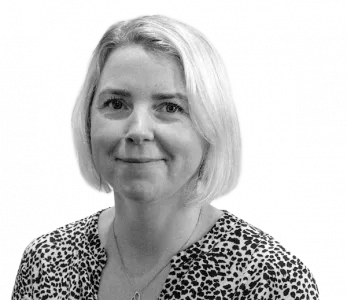
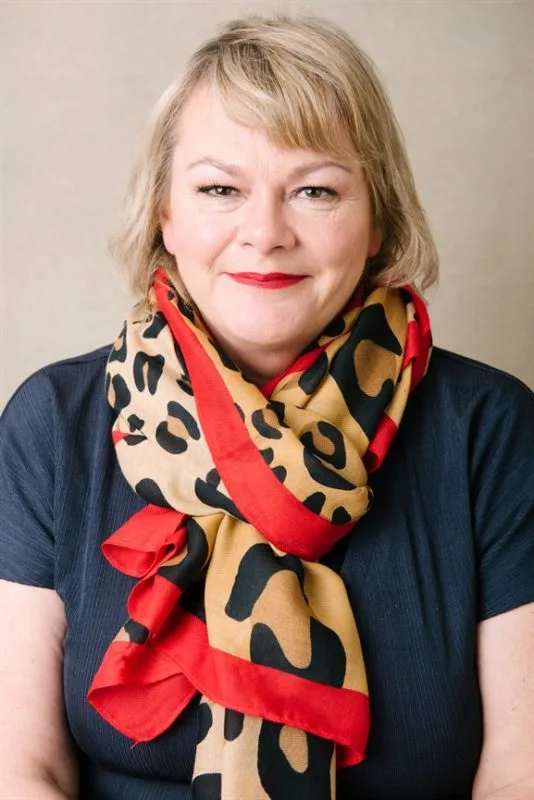
WITH ALMOST 40 years’ experience watching health and safety evolve, Heather Beach has become a leading voice for women in the profession. Through Women in Health and Safety, which she founded in 2014, and the Healthy Work Company, she is passionate about helping women connect, share experiences and become more visible.
How did you get into the health and safety sector?
I’ve never actually been a practising health and safety professional, yet I’ve spent almost 40 years watching the profession evolve from a unique vantage point.
My first “proper job”, aged 21, was selling the first CD-ROM containing access to full-text information. It brought together health and safety legislation, regulations and guidance in a project involving HSE, HMSO and the leading-edge technology company I worked for – SilverPlatter.
Within seven years I’d been promoted seven times which included at 24, moving to our Amsterdam office, where I published a wide range of international health and safety information on CD-ROM from organisations including the ILO, EU, NIOSH and CCOHS.
I was then head-hunted by Barbour Index, which provided health and safety information on microfiche and spent seven years helping to transform the business from microfiche to an online product while supporting a culture change programme.
After a three-year sabbatical in Sydney, where my daughter Rosie was born, I returned, not only working part time as a single mum at that point, but to find HSE information had become freely available, the internet was taking off and Barbour was in decline. I began asking health and safety professionals what they really needed, assuming the answer would be new guidance. Instead, what emerged was a need for influencing skills.
Twenty years ago, we started running the first influencing skills programmes for health and safety professionals, while Barbour evolved to offer toolbox talks, legal registers, and practical resources.
I later moved into running a division for UBM, which had acquired Barbour, including Safety & Health Expo, SHP magazine, Facilities Management Show and IOSH conference.
After more than two decades in publishing and events, I started questioning whether I wanted to spend the rest of my career in a large organisation where with a huge team and remit, I had to focus primarily on people management and financial performance. I missed doing research and learning, and I realised I was spending too much time working on my weaker areas, and not building on my strengths.
From within my role at UBM, I began running a series of micro-experiments to explore whether my strengths, also might lie in speaking, writing and strategy. I began a Master’s in Applied Positive Psychology and used the Japanese concept of Ikigai—finding the intersection between what you enjoy, what you’re good at, what the world needs and what people will pay for—to shape what eventually became Healthy Work Company.
Since then, we’ve worked with more than 250 organisations, helping them take a more strategic approach to wellbeing, work-related stress, leadership and psychosocial risk.
Who has been the biggest influence on your career?
It is difficult to identify one person because I have been influenced by many people and by different disciplines.
However, Sheila Pantry was certainly one of my earliest and greatest influences. She was Head of Information at HSE and an extraordinary force of nature. She never really retired and remained deeply involved in the profession throughout her life.
More broadly, I have also been influenced by positive psychology, behavioural science, organisational culture and leadership. Those fields have shaped my belief that, whatever profession we work in, technical knowledge alone is never enough. We also need to understand people, power, systems and how change actually happens. Over the years, I’ve become increasingly convinced that one of the greatest barriers to good leadership isn’t a lack of knowledge—it’s ego. The more self-aware we become, the less attached we are to being right, the more curious we become about other people’s perspectives and the more likely we are to create environments where people can learn, contribute and thrive.
What more can be done to encourage women to choose health and safety as a career?
We are already seeing real progress, with more women and more young people entering the profession.
When I first began working in the sector, almost 40 years ago, the demographic was overwhelmingly older males often from the military, police or engineering.
Over the last 20 years, I have seen enormous change. Women in Health and Safety, which I founded in 2014, has been part of that movement by creating opportunities for women to connect, share experiences and become more visible.
We still have work to do around wider diversity.
What more can be done to help women progress within the sector?
Women need to recognise that visibility matters.
I spent years believing that producing good work would speak for itself. It doesn’t. Many women still believe that if they work hard, deliver consistently and quietly get on with the job, their contribution will automatically be recognised. They are also often balancing work and life in ways that are still not the reality for many men.
Being productive and technically capable is essential, but women also need to build networks and speak about their work outside their organisations.
Visibility is not the same as self-promotion. It is about allowing other people to understand the contribution you are making, the ideas you have, the successes and failures.
Organisations also have a responsibility. Women need access not only to mentoring but to sponsorship: senior people who will advocate for them.
Through the Women in Health and Safety network, I have seen how powerful networks, role models and opportunities to speak can be.
Why do you feel health and safety is a profession others should consider joining?
It is such a highly skilled profession, and it offers far more variety than many people realise.
As well as technical competence, today’s health and safety professionals also need to influence, negotiate, communicate, understand commercial realities and appreciate what drives human behaviour.
It is also an extraordinary profession from the perspective of the places it can take you. One day you could be working in the Shard, the next at Leeds Castle, in a brewery, a university, a theatre or a major manufacturing site.
You have the opportunity to understand how organisations really work and to interact with people at every level, from the shop floor to the boardroom.
For someone who is curious, enjoys variety and wants purposeful work, it is a hugely rewarding career.
What are the main challenges currently facing your organisation?
Healthy Work Company operates in a rapidly changing and still relatively immature wellbeing market.
When we began, many organisations saw Mental Health First Aid as the principal workplace intervention.
We are now moving towards a more cultural, strategic and measurable approach. Organisations are beginning to recognise that wellbeing cannot be separated from job design, leadership, workload, change and organisational risk.
The challenge isn’t convincing organisations that wellbeing matters. It’s helping them move beyond isolated initiatives and invest in prevention by bringing Health and Safety, HR, Wellbeing and operational leaders together, while demonstrating that those interventions genuinely improve the way work is designed and experienced.
What are your key focus areas for the next 12 months?
My principal focus through Healthy Work Company is helping organisations take a more strategic approach to preventing work-related stress and managing psychosocial risk.
That includes supporting organisations to measure what is happening, identify the aspects of work that are creating harm and bring together the right people to make meaningful changes.
I also want to continue developing the conversation between Health and Safety, HR and Wellbeing. I believe broader governance systems led by standards and legislation, will ultimately force this and am not surprised at the growth in hats the health and safety professional is being asked to wear, as well as the growth of the broader “risk” function.
Alongside that, I am focused on making Women in Health and Safety more sustainable. We now have a group of women who have agreed to become more involved, but we need a stronger structure and funding for administration. With over 5500 members and having run more than 200 events, I remain a bottleneck!
The Rebel Women book project is also a major priority. By capturing the experiences of women at different career stages, I hope we can provide the next generation with practical advice and a range of role models.
Ultimately it is all connected. Healthy Work Company is about helping organisations create healthier, more sustainable places to work. Women in Health and Safety is about helping to build a diverse profession to support that. Looking back over the last 35 years, I’ve watched health and safety evolve from a profession centred on information and compliance into one increasingly focused on leadership, culture and wellbeing. I think that’s exactly where its future lies.
Heather Beach is the founder of Healthy Work Company. For more information, visit www.healthyworkcompany.com
HSM Newsletter
HSM publishes a weekly eNewsletter, delivering a carefully chosen selection of the latest stories straight to your inbox.
Subscribe here