Talking safety with Debbie Airey
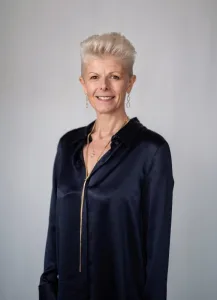
DEBBIE AIREY’S journey into health and safety was far from traditional. In this Women in Safety feature, she discusses the influences that shaped her, the realities of leadership, and the human impact at the heart of the profession.

 How did you get into the health and safety sector?
My route into health and safety was not planned, and it certainly was not traditional. I grew up around industry, as my dad was a welder, and industrial environments were familiar to me from a young age. What I saw early on was simple but powerful. Work can be dangerous, and safety is not paperwork. It is protection of people, families, and futures.
I began my career in industrial gases, which naturally exposed me to risk, compliance, and the critical importance of safety systems. Over time, I realised health and safety was not a support function. It was a leadership responsibility. Done well, it saves lives. Done poorly, it costs them.
What drew me fully into the profession was purpose. Health and safety sits at the intersection of engineering, behaviour, people, and leadership. It is one of the few professions where your work has a direct and measurable impact on human wellbeing every single day.
Who has been the biggest influence on your career?
There is not one single person, as there have been many who influenced me in different ways.
My dad played a defining role in shaping how I view people, leadership, and fairness. Alongside being a welder, he served as the Union Representative for the maintenance arm of the West Midlands Fire Service. From him, I absorbed lessons about employment, management, fairness, representation, and inclusiveness long before I entered the workplace myself. I learned how people should be treated, how voices should be heard, and how leadership is ultimately about responsibility to others.
Professionally, I have also been shaped by strong leaders, difficult environments, and moments where I had to prove capability. Some of the greatest growth in my career has come from challenge rather than comfort. Today, I am continually influenced by the women I meet across industry, women who persist, lead, and push forward despite barriers. Their courage reinforces why representation and voice matter.
What do you enjoy most about your role?
The impact.
Health and safety is not abstract. It is real. When systems improve, people go home safe. When culture improves, organisations become stronger. That connection between strategy and human outcome is what I value most.
I also enjoy building, building teams, building direction, and creating environments where people can grow. My role allows me to work across countries, disciplines, and cultures, shaping not only commercial outcomes but organisational direction.
Above all, I value people. Leadership is fundamentally about people, protecting them, supporting them, and helping them see potential in themselves that they may not yet recognise.
What are the biggest challenges you face in your role?
The biggest challenges are rarely technical. They are human and systemic.
Balancing commercial growth with safety integrity is constant. Growth must never come at the expense of protection. Another challenge is navigating complexity, including global markets, regulation, cultural differences, and rapidly evolving technology.
Leadership can also be isolating. Decisions carry responsibility, and the weight of those decisions is real. There are still moments where being a woman in senior leadership within technical and industrial environments presents bias, sometimes subtle and sometimes direct. However, challenge is something I have learned to use as a driver for growth rather than a barrier.
What more can be done to encourage women to choose health and safety as a career?
Visibility and storytelling matter enormously.
Many women do not fully see what health and safety truly is. It is often misunderstood as compliance or restriction, when in reality it is leadership, engineering, behavioural science, innovation, and impact.
Encouragement must extend beyond entry. It is equally important to ensure women stay. We must ask how we prevent women from leaving and how we create environments where women feel safe, heard, and able to thrive.
This is where equitable safety becomes critical. Not only physical protection, but psychological safety. Women must feel able to contribute, challenge, lead, and grow without fear of dismissal, bias, or exclusion.
To strengthen participation, we need visible role models across all stages of career, honest conversations about pathways into the profession, work environments grounded in fairness and inclusion, and a focus on both attracting and retaining women within the sector.
When women can see themselves reflected in leadership and experience genuine inclusion, the profession becomes not just accessible, but sustainable.
What more can be done to help women progress within the sector?
Progression requires more than entry. It requires structural support.
We need strong sponsorship, not just mentorship, equal access to leadership opportunities, cultures that recognise different leadership styles, active challenge of bias when it appears, and confidence and visibility support for women in technical leadership.
Capability is not the issue. Often, the barrier lies in recognition, opportunity, or systemic bias. Organisations must move beyond statements of equality and actively remove invisible obstacles that restrict progression.
Why do you feel health and safety is a profession others should consider joining?
Because it matters.
Health and safety is one of the few professions where your work directly protects human life. It combines science, behaviour, engineering, leadership, and ethics. It is intellectually demanding, emotionally meaningful, and socially valuable.
The profession is also evolving rapidly. Technology, connected safety, data, and environmental responsibility are transforming safety into something far more strategic and impactful than many people realise.
For those seeking purpose, challenge, and the ability to make a tangible difference, health and safety offers a powerful and rewarding path.
What are the main challenges currently facing your organisation?
Like many organisations operating globally, we face both transformation and growth challenges.
Technology is reshaping safety. Connected devices, data intelligence, and predictive monitoring are changing how risk is understood and managed. Adapting to this while maintaining reliability and trust is critical.
Operating across multiple regions brings complexity, including regulatory differences, cultural variation, and market dynamics that must be balanced carefully. Growth itself also presents challenge, as integrating teams, maintaining culture, and ensuring safety remains central during expansion requires strong leadership and discipline.
What are your key focus areas for the next 12 months?
The coming year is focused on three core priorities.
Advancing connected safety and data intelligence. Technology is enabling safety to shift from reactive to predictive, and strengthening insight, integration, and smarter protection systems is a key focus.
Developing people and leadership capability. Strong organisations are built through strong people, and developing inclusive leadership, empowered teams, and sustainable culture is central.
Continuing to strengthen diversity, representation, and equitable safety. Encouraging more women into the profession, supporting their progression, and ensuring they remain within environments that provide both physical and psychological safety is a personal and professional priority.
Closing reflection
Health and safety is ultimately about care. Care for people, responsibility, and doing what is right even when it is difficult. My journey in this profession has shown me the strength of resilience, the importance of fairness, and the power of inclusive leadership.
If sharing my experience helps even one more woman feel that she belongs, that her voice matters, and that she can lead within this profession, then speaking about it will always be worthwhile.
Debbie Airey is chief commercial officer at Safe Monitoring Group. For more information, visit https://safemonitoringgroup.com/
HSM Newsletter
HSM publishes a weekly eNewsletter, delivering a carefully chosen selection of the latest stories straight to your inbox.
Subscribe here