





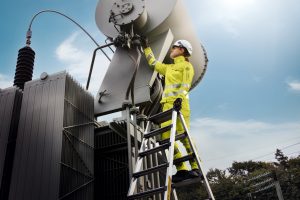
Layering for protection
AS EXTREME weather conditions expose outdoor workers to invisible cold-related dangers, Anna West explains why adaptable layering systems are becoming essential.

Extreme weather patterns are making outdoor working conditions increasingly unpredictable. Across construction, energy, transport and infrastructure sectors, workers regularly face cold temperatures, wind and wet conditions — often while moving between high-intensity physical activity and more static tasks. These constant shifts place significant strain on the body and expose a hidden safety challenge: managing heat, moisture and protection effectively throughout the working day.
Many workers dress for the coldest part of the day, which is understandable, but often counterproductive. During physical activity, the body rapidly generates heat, causing perspiration to build inside clothing layers. When activity slows, damp garments can quickly accelerate heat loss — particularly in windy or wet conditions.
Maintaining thermal balance
Scientific studies show that cold related problems are rarely caused by low temperatures alone, but rather by an imbalance between heat production and heat loss. During physical work, the body generates warmth. If there is too much insulation in clothing then heat is trapped, causing overheating and perspiration. When activity slows, the body cools rapidly through the moist layers. This process reduces muscle strength, slows reaction time, and impairs fine motor skills. This significantly increases the risk of mistakes and fatigue, especially for workers in the construction, energy supply, and transportation sectors.
Why dry air protects
The physics behind this are simple: clothing keeps us warm not because the material is warm itself, but because it traps air, which acts as an invisible insulating layer, as long as it stays dry. When moisture enters the system (from rain outside or sweat inside), this effect disappears. Moisture displaces the trapped air, and conducts heat up to 25 times faster. As a result, insulation performance drops, especially where sweat is involved as it tends to accumulate on the inner layers and goes unnoticed.
Wind: The silent accelerator of heat loss
Similarly, windy conditions lead to greater heat loss. Without a windproof outer layer, wind massively increases heat loss through convection. It sweeps away warm air near the body as well as the insulating air pockets within clothing. The wind chill effect means that at 0 °C with a 30 km/h wind, the body perceives conditions similar to –10 °C. The risk becomes critical when sweat or rain has already penetrated the system because wet insulation dramatically amplifies wind chill.
In practice, this is one of the most common issues: clothing that lacks robust wind and weather protection loses its insulating ability within minutes because the air cushion simply disappears.
Standards such as ISO 11079, which assesses the cold protection of full clothing systems, consider the interaction of temperature, air movement, and layering — providing safety professionals with robust guidance for selecting protective clothing in real world environments.
Protection works as a system
Cold protection is only dependable when the entire clothing system works in harmony. Base layer, insulation layer, and outer weather protection must be precisely aligned to keep the body’s thermal balance stable — even during sudden weather changes and varying work intensities.
A well designed layering system follows a clear structure:
- Base layer – managing moisture
Lightweight functional underwear made from merino wool or synthetic fibres transports sweat away from the skin, preventing evaporative cooling. Cotton, for example, traps moisture and leads to rapid chilling. A high performing base layer keeps the skin dry — enabling the layers above to function effectively. - Insulation layer – trapping air and retaining warmth
Fleece, synthetic loft materials, and lightweight insulated jackets trap plenty of warm air without causing overheating. The goal is balanced warmth, minimising sweat accumulation. WINDSTOPPER by GORE TEX LABS insulation or softshell garments can also be effective, reliably blocking wind while releasing excess heat. - Outer layer – blocking wind and moisture
Finally, workers need a windproof, waterproof, and breathable shell to protect underlying layers from convection and moisture. Only when the air cushion remains undisturbed can insulation achieve optimal performance. GORE TEX technologies enable sweat vapour to escape while blocking rain and melting snow — ensuring stable warmth even under rapidly changing conditions.
The importance of trousers
Field studies conducted with a major South Korean construction company show the importance of a good layering system. Their engineering and construction teams regularly work in double digit sub zero temperatures combined with strong winds. A revealing aspect of the study found that trousers need to be integrated into the layering system – a point often omitted in favour of layering the torso. Analysis revealed that the lower body — not the torso — was the most vulnerable weak point. Once trousers were systematically layered, the duration in which workers could operate comfortably and safely nearly doubled. What we now know is that a whole, thought-through layering system is the most effective way to protect workers from cold.
This insight is increasingly shaping procurement processes across Europe: what matters is not the warmth of a single garment, but the performance of the entire system.
Conclusion
Unpredictable weather and sudden fluctuations in temperature and moisture are now the new norm. Companies must choose workwear that not only warms but stabilises the body’s thermal balance and supports movement. Thermal comfort research is clear: reliable cold protection can only be achieved through the coordinated interaction of all layers — and through clothing that adapts to changing work conditions without requiring constant manual adjustments. Systems that store heat efficiently, release moisture effectively, and allow full freedom of movement provide the best foundation for safety and performance, even under the harshest conditions.
Anna West is comfort scientist for protective clothing at the GORE‑TEX brand. For more information, visit www.gore-tex.com/en_uk
Related posts

HSM Newsletter
HSM publishes a weekly eNewsletter, delivering a carefully chosen selection of the latest stories straight to your inbox.
Subscribe here