


Warehouse Racking Safety: Beyond Annual Inspections
ANNUAL PALLET inspections are the foundation of warehouse racking safety, but they are not all of it. Most UK sites now book one, file the report as evidence of compliance, and move on. The difficulty lies in the fifty-one weeks that follow.
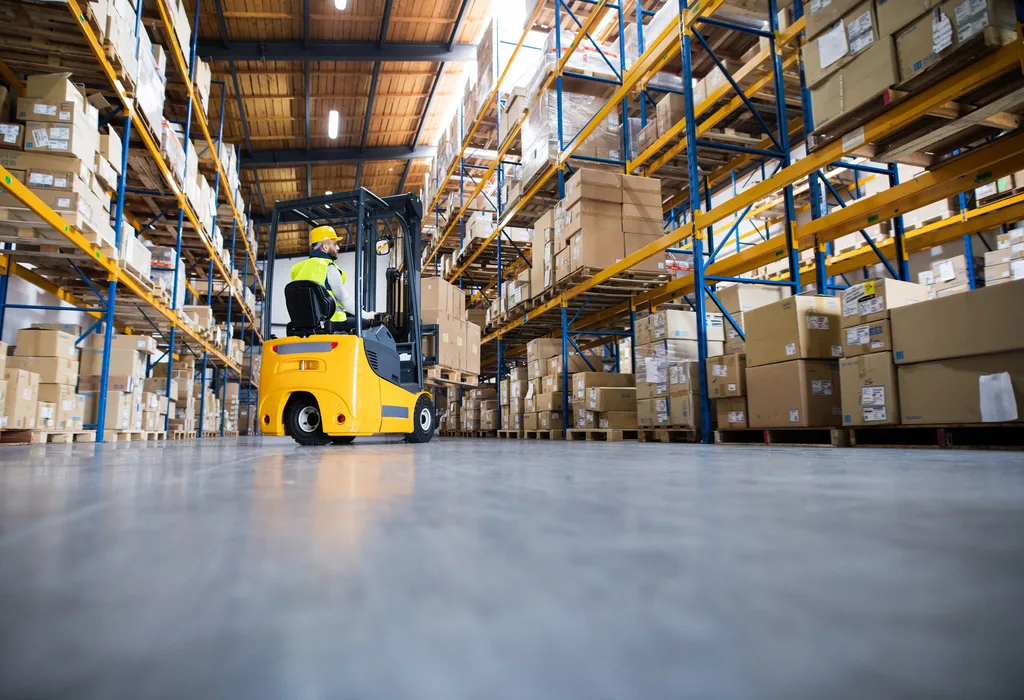
Your warehouse pallet racking changes condition daily, taking knocks from forklifts and carrying loads it was never quite designed for, while the inspection record stays frozen at the date it was written.
This article examines five gaps that open up between pallet racking inspections. None of them are unusual, and none of them need additional budget to close, but all of them are the sort of thing an investigator asks about after an incident. What you need is a system that keeps working when nobody is watching.
Why annual pallet racking inspections alone leave you exposed
Annual racking inspections give you a professional assessment of your installation at a single point in time, which is valuable but inherently limited. They cannot tell you what condition your racking will be in next March. Your duties under warehouse racking regulations, by contrast, run continuously. Regulation 5 of PUWER requires employers to ensure work equipment is maintained in an efficient state, in efficient working order and in good repair, and that wording places an absolute duty on the employer, with no allowance for balancing maintenance against cost.
HSG76, the HSE’s warehousing and storage guidance, sets out how that duty applies to racking in practice, describing a three-tier inspection regime with expert inspections at intervals of no more than twelve months. The annual inspection evidences your compliance. It does not discharge it.
This distinction matters enormously when something goes wrong. An inspection report dated eight months ago proves only that the racking was sound eight months ago, and what an investigator will ask for is the record of everything that has happened since. That record is the part most sites cannot produce.
Gap one: the racking safety inspection nobody records
A routine racking safety inspection is only as useful as the paperwork behind it. Plenty of warehouses genuinely do carry out weekly walk-rounds of their storage equipment. But far fewer can produce a dated, signed record showing what was checked and what was found. Without that trail, the checks may as well not have happened, because there is nothing to demonstrate them.
HSG76 places the routine tier with a nominated person on site, carried out weekly or monthly depending on the operation. This role is usually called the PRRS, short for Person Responsible for Racking Safety. They walk the racking on a defined schedule, record their findings on a structured form, and escalate anything beyond cosmetic damage. A quiet word with a supervisor is not a substitute for a written record.
Three practical failures account for most of the problem:
- No standard form. Findings end up in a diary, a WhatsApp message or nowhere at all. A consistent pallet racking inspection checklist fixes this at almost no cost, and printable templates are freely available.
- No cover arrangement. The nominated person takes two weeks of leave, and the checks silently stop. Name a deputy, then record that they have been trained.
- No retention period. Completed forms get binned once the next check is done. Keep them for as long as you keep any other maintenance record.
Fixing this gap costs nothing beyond a small amount of discipline. Between annual pallet racking inspections these records are the only evidence you hold, and they turn work your team is already doing into something you can rely on.
Gap two: damage that never gets reported
Pallet rack safety depends on damage being reported the moment it happens. Impact damage is the single largest cause of racking failure, and it is routinely invisible to management. There are two reasons for that, and both are cultural rather than technical. Operatives often do not know what actually counts as damage, so a scuffed upright or a displaced beam lock seems unremarkable. Others know perfectly well but stay quiet, because reporting an impact means naming whoever caused it.
The consequences are the same either way. A bent upright or a missing beam connector lock looks minor from a distance, yet either can compromise the load-bearing capacity of the bay. Damage accumulates quietly between pallet racking inspections, and by the time the annual visit finds it, that bay may have been carrying load for months. Sometimes the inspection is not what finds it at all.
Two changes address this properly. The first is genuinely blame-free reporting, where impacts are logged as safety information rather than disciplinary events. The second follows from HSG76 itself, which expects the person carrying out internal inspections to be specifically trained for the role rather than simply nominated for it. Practical rack safety training for the people working around the racking every day covers how to recognise common damage types, how the green, amber and red classifications work, and when to isolate equipment rather than wait and see.
Sessions are typically delivered on site over half a day, which makes them straightforward to schedule around shift patterns. Training also strengthens your position on competence. If you are ever asked to demonstrate that operatives understood the risks they worked alongside, certificates are the answer.
Gap three: your regime treats all pallet racking the same
Most racking safety guidance quietly assumes standard selective racking. In reality, different racking systems fail in different ways, and a generic weekly walk-round will miss those differences entirely. Sites running drive-in, push-back or pallet live systems need checks that reflect how those installations are actually used, because a check designed for static beams tells you nothing useful about a moving cart.
The table below sets out where the risk concentrates in each common system.
|
Racking type |
Where damage concentrates |
What routine checks should cover |
|
Selective pallet racking |
Uprights, beams, connectors, safety clips |
Bent uprights, cracked welds, missing clips, overloading |
|
Drive-in and drive-through |
Frames and rails inside the lanes |
Scrapes, leaning frames, damaged rails, clearance issues |
|
Push-back |
Carts, tracks and structure |
Jammed carts, worn wheels, bent tracks |
|
Pallet live storage |
Rollers, tracks and speed controllers |
Misaligned rollers, damaged tracks, pallets sticking |
|
Cantilever racking |
Arms, columns and anchors |
Bent arms, loose anchors, missing load markings |
|
Narrow aisle |
Upright faces and aisle ends |
Contact damage from reduced clearances |
Drive-in racking deserves particular attention on any mixed site. Forklifts operate inside the structure rather than alongside it, which concentrates impact damage in exactly the places that are hardest to see from the aisle. Narrow aisle installations carry a similar problem for a different reason, since reduced clearances leave very little margin for operator error. Where either is in use, physical protection at impact points and well-positioned warehouse safety barriers do more good than any amount of signage.
Review your warehouse racking inspection sheet against what you actually have installed. If your site runs four racking types and your form covers one, that is a gap worth closing this month.
Gap four: amber findings that are still amber next year
Pallet racking inspections classify damage using a traffic light system, and the categories are straightforward enough. Green means monitor, amber means the damage needs attention before it worsens, and red means unload and isolate the bay immediately. Red items get dealt with, because the operational disruption forces the issue. Amber is where regimes quietly fail.
Amber findings sit in a report with no owner, no deadline and no closure. Nobody reloads the bay incorrectly, but nobody repairs it either. Twelve months later the next HSE racking inspection finds the same fault, this time accompanied by an audit trail proving it was known about and left. That trail is considerably worse than never having identified the fault at all.
A simple escalation process removes the problem:
- Every amber finding is assigned to a named individual on the day the report arrives.
- Each one is given a target date, not a vague commitment to address it soon.
- The affected bay is offloaded or load-restricted until the repair has been completed.
- Completion is recorded with evidence, and the report is formally closed out.
- Open items are reviewed at a standing monthly safety meeting.
Structural repairs should be carried out by qualified specialists rather than maintenance staff. Racking components are engineered items, and welded or improvised repairs can compromise the original design capacity.
Gap five: racking is missing from your pallet racking risk assessment
A warehouse risk assessment frequently covers vehicles, manual handling and working at height in careful detail, then treats racking as a fixed feature of the building. It is not. Racking is work equipment that people load, unload and drive around all day, and a specific pallet racking risk assessment closes that gap while surfacing issues no visual check would ever find.
The areas most often missing are behavioural rather than structural. Loading practice is the obvious one, because overhanging pallets and damaged timber transfer load in ways the system was never designed for. Aisle discipline belongs in there too, since obstructions and poor lighting cause the collisions that damage uprights in the first place. And operators cannot respect load limits they are unable to read, which makes signage a safety control rather than housekeeping.
Modifications deserve their own line in any assessment. Racking that has been extended, reconfigured or partly rebuilt from mixed components may no longer match its original design specification. If your installation has changed since it was commissioned, the design documentation needs to change with it.
Who is actually qualified to inspect your racking?
Competence is layered, and each layer carries a different threshold. Every operative should be trained to recognise and report damage. Routine checks require a trained nominated person, though not a formal external qualification. The annual expert inspection is different, because HSG76 requires it to be carried out by a technically competent person.
The recognised benchmark for warehouse racking inspections in the UK is the SEMA Approved Racking Inspector, usually shortened to SARI. SEMA is the Storage Equipment Manufacturers Association, the trade body that sets storage equipment standards in this country. A SARI is trained, examined and approved by SEMA itself, and that is precisely what separates the qualification from a general engineering background. Commissioning SEMA approved racking inspections gives you a report written to a consistent methodology and signed by someone whose competence has been externally verified.
One point is worth clarifying, because the acronyms get muddled. Installation and relocation work sits under a separate scheme called SEIRS, the Storage Equipment Installers Registration Scheme, which governs the assembly, installation, dismantling and relocation of racking systems. Inspection tells you what is wrong; SEIRS-registered installers are the people qualified to put it right.
What a defensible warehouse racking safety regime looks like
Pull the five gaps together and the picture is fairly simple. You need annual pallet racking inspections, documented routine checks by a named and trained person, a reporting culture that surfaces impacts rather than burying them, and check sheets that match the systems you actually operate. You also need a closed loop on every finding, so that identified damage has an owner and a completion date attached to it.
None of this requires significant spend. What it requires is that each element produces a record, because a regime you cannot evidence is a regime you cannot defend.
HSM Newsletter
HSM publishes a weekly eNewsletter, delivering a carefully chosen selection of the latest stories straight to your inbox.
Subscribe here