



Why is gravity such a persistent challenge?
THIS NO Falls Week, Stephen Barnfield examines why falls from height remain one of the workplace’s most persistent safety risks.
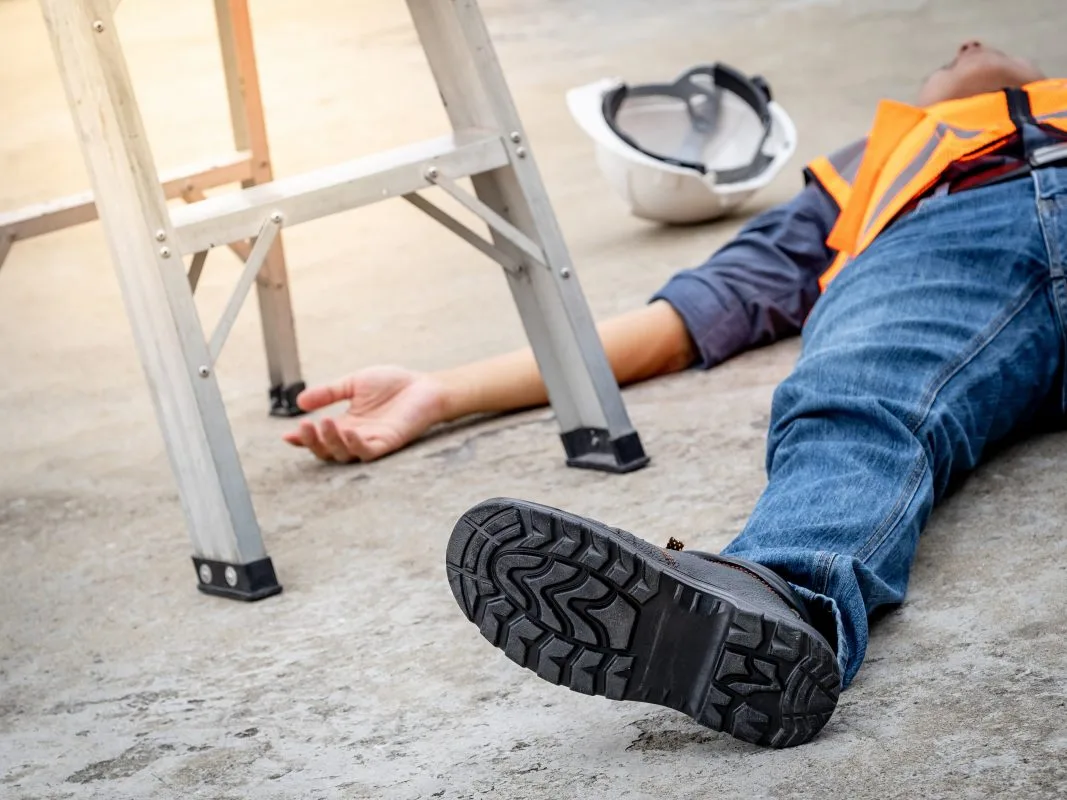
 No Falls Week has been running since 2004 and is a campaign dedicated to promoting safe working at height in the UK. It aims to build knowledge and provide tools and inspiration to help prevent falls and ensure everyone that works at height comes down safely.
The campaign remains hugely important for many different industrial sectors, with falls from height proving a significant risk for employers and employees. The first big safety trial I was involved in was about a fatal fall from height. A steelworker fell several stories, suffering catastrophic, unsurvivable injuries. This was a tragic, avoidable death, as well as a complex and costly investigation, and a prosecution that spanned several years.
The last case I was in court with – just last week – involved another fall from height.
What has happened in between these two cases? 20 years have passed between them, during which I’ve dealt with numerous safety prosecutions and other regulatory issues, and I can’t recall a single year – possibly not even a single month – where I’ve not received a query about a serious or fatal fall from height.
My experience, sadly, reflects a broader trend. Over the same period, whilst the actual number of falls from height has fluctuated a little over the years, it has remained a stubbornly present risk. There has never been less than 30 fatalities each year, representing the tip of an iceberg made up of several thousand reportable cases. It’s also likely that the issue is even bigger, with many other unreported and unreportable incidents happening. There has been a downward general trend of this type of injury and fatality, but when you consider the nature of the risk, it’s hard to see why it hasn’t been reduced further.
So, why is gravity such a persistent challenge? And why do businesses still struggle when it comes to managing risks of falls from height?
The first and most obvious point, is that working at height is an ever present risk. It’s hard to imagine a business that does not, at some time, have to deal with an activity that involves leaving the ground. This could be something as simple as changing a lightbulb, reaching stored items or simple maintenance. Or it could be an industry and business where work at height is a core activity, like in construction, scaffolding, window cleaning and even leisure activities, such as climbing and zip wires, through to the peripheral tasks like retrieving a football from a roof. The simple fact is that the potential energy created in leaving the ground presents a constant risk of harm.
This creates its own problems. It is such a commonplace risk that people tend to discount it. Ask someone to rewire high voltage equipment or transport explosive chemicals and alarm bells ring and risk management kick in: ‘How do we do this safely? How do we minimise risk?’ But most of us deal with the risks of falls almost as a matter of course – we jog downstairs to grab breakfast, head upstairs on the bus, hop in the lift at work and grab a step-stool to reach the file on the top shelf that you need without a second thought.
From a regulatory perspective, the problems become even more stark. When someone falls and is discovered injured or even dead, it will often be obvious what has happened – where they have fallen from, where there was a gap, where there was nothing to stop the fall. Similarly, it can be clear where appropriate measures have not been taken, appropriate risks assessments not made, the hierarchy of controls not implemented, and the copious guidance not applied.
Of course, things can still go wrong when everything has been done correctly, and all reasonably practicable steps have been taken, but so often there will be a break in that chain, which compounds the harm of the fall with a difficult or even indefensible prosecution to follow. And that’s the final challenge: hindsight.
It can be so easy to see what could have been done differently after a fall has occurred. HSE press releases following successful prosecutions often suggest a tragic accident at the heart of a case could have been avoided, if simple measures had been implemented. The same could be said for prosecutions in such cases. If guidance had been followed, there is every reason to hope that HSE would recognise this when assessing a case, and that a case could be defended effectively.
So, what does the guidance say? In summary, avoid work at height, where possible. If such work cannot be avoided, seek to prevent falls by implementing effective control measures. Where risk cannot be eliminated, implement measures to mitigate the effect of a fall, and, at every stage, favour collective measures that do not rely on individual compliance, but which protect anyone exposed to risk.
HSE offers clear and comprehensive guidance across the spectrum of work at height, including step by step guides for assessing and controlling risk, as well as guidance as for the selection, maintenance and safe use of equipment such as ladders.
The message is simple for employers, protect yourself and your employees from the possible harm of falls. Following the freely available guidance can help organisations to avoid the consequences of injury or death caused by falls from height. No Falls Week is a good reminder of this and well worth paying attention to.
Stephen Barnfield is a specialist Regulatory Partner in the Insurance team at national law firm Forbes Solicitors. For more information, visit www.forbessolicitors.co.uk


HSM Newsletter
HSM publishes a weekly eNewsletter, delivering a carefully chosen selection of the latest stories straight to your inbox.
Subscribe here