



HSE launches inspection crackdown on stone cutting
THE HEALTH and Safety Executive (HSE) has announced a major package of measures to protect workers from the dangers of engineered stone dust, including silicosis, a deadly-but-preventable lung disease caused by breathing in silica dust released during stone cutting.
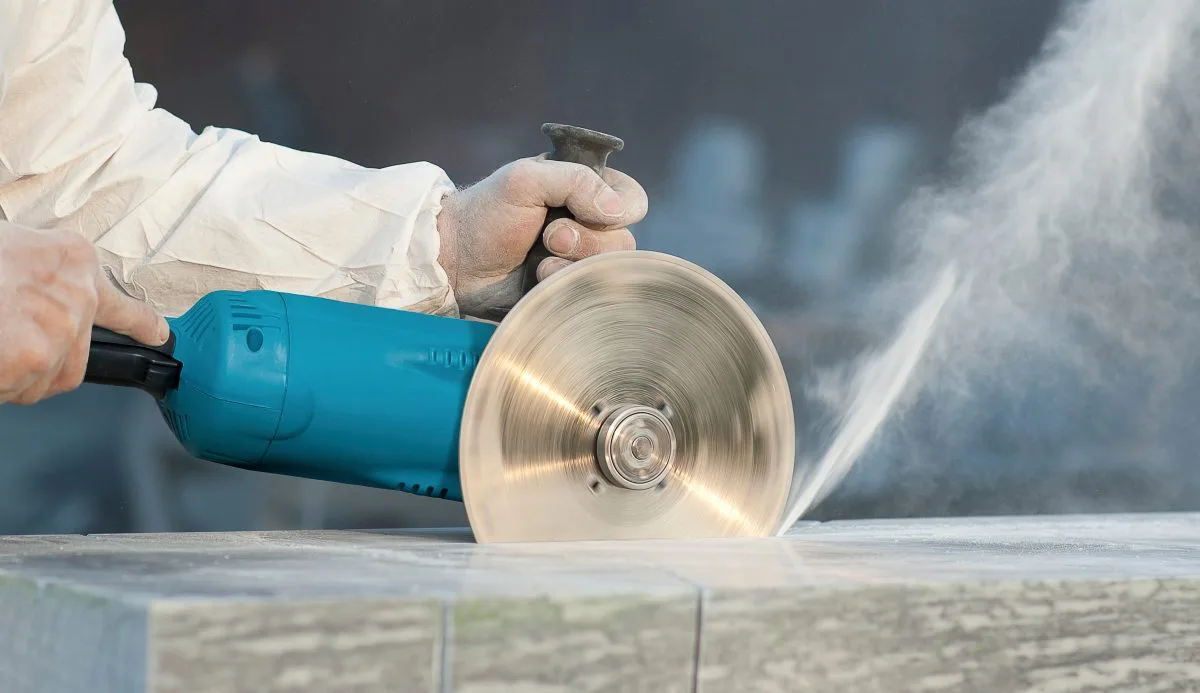
The package includes the publication of new guidance making clear that dry cutting of engineered stone is unacceptable and that water suppression techniques, already used by many industry leaders, are how businesses should meet the legal requirement.
The guidance, launched ahead of this week’s Stone & Surfaces Show of industry leaders and tradespeople, will be backed-up by a nationwide inspection programme. Over the next 12 months, HSE inspectors will conduct more than 1,000 visits to fabricators across Great Britain, with enforcement action taken against those failing to meet the required standards. The first inspections are already underway.
The deaths of two young workers from silicosis in recent years prompted calls for action on engineered stone cutting from MPs, trade unions, and medical professionals.
In response to these emerging cases, HSE undertook a two-year process of research and industry engagement and has concluded that the most effective and proportionate action is to make sure proper controls are in place and actively enforced.
The research found that dry fabrication typically results in exposure to respirable crystalline silica (RCS) five to ten times higher than wet methods using equivalent tools. It also found that lower-content silica engineered stone is available at the same quality, removing any reason for businesses not to switch to less dangerous products. On the back of this evidence, HSE is acting decisively to ensure those controls become universal across the industry.
To provide clarity to businesses and workers, HSE has published its first-ever COSHH (Control of Substances Hazardous to Health) guidance sheet specifically for engineered stone. The guidance sets out in plain English what employers must do: switch to engineered stone with a low silica content; use on-tool water suppression, control mist; provide appropriate respiratory protective equipment (RPE); and carry out regular health surveillance. These are legal requirements.
Mike Calcutt, deputy director in HSE’s Engagement and Policy Division, said “Today’s guidance marks our most significant intervention in the engineered stone sector to date, and not without good reason.
“Silicosis is incurable, but it is entirely preventable. No worker should lose their life to a lung disease caused by their job, and that is why we have taken this action.
“We have spent the past two years conducting extensive research and industry engagement to understand the scale of this risk. What we found was stark. Many businesses are not putting the right controls in place, they are still using engineered stone with high silica content, and dry cutting, which must stop.
“To every employer in this sector: the guidance is now published, the expectations are clear, and our inspectors are coming. Those who are cutting corners are not just putting their workers at risk — they are undercutting the businesses doing things properly. We will create a level playing field.
“To workers handling engineered stone: know your rights and know the controls that should be keeping you safe. If you have concerns, contact HSE.”
Engineered stone, widely used in kitchen and bathroom worktops, can contain up to 95% crystalline silica. Unlike natural stone, where silica-related disease typically takes decades to develop, recent cases have suggested that exposure to engineered stone dust can cause silicosis in a matter of months or years. Workers can suffer permanent and irreversible lung damage before experiencing any symptoms. By the time symptoms appear, it may be too late.
Kevin Bampton, chief executive officer of the British Occupational Hygiene Society, said: “While the cause of headline-grabbing acute silicosis lies with businesses which blatantly flout the law and exploit workers, HSE’s revised guidance provides much-needed clarity for the mainstream industry and for the professionals supporting it. As the UK’s leading scientific organization on health protection in the workplace, we are grateful to HSE’s science team for addressing previously unanswered questions about the effectiveness of controls. The guidance reflects this evidence base and brings clarity to what is needed to help protect workers.”
Related posts


HSM Newsletter
HSM publishes a weekly eNewsletter, delivering a carefully chosen selection of the latest stories straight to your inbox.
Subscribe here