

Your questions answered by the British Safety Council
THE BRITISH Safety Council answers your questions on health, safety and wellbeing.
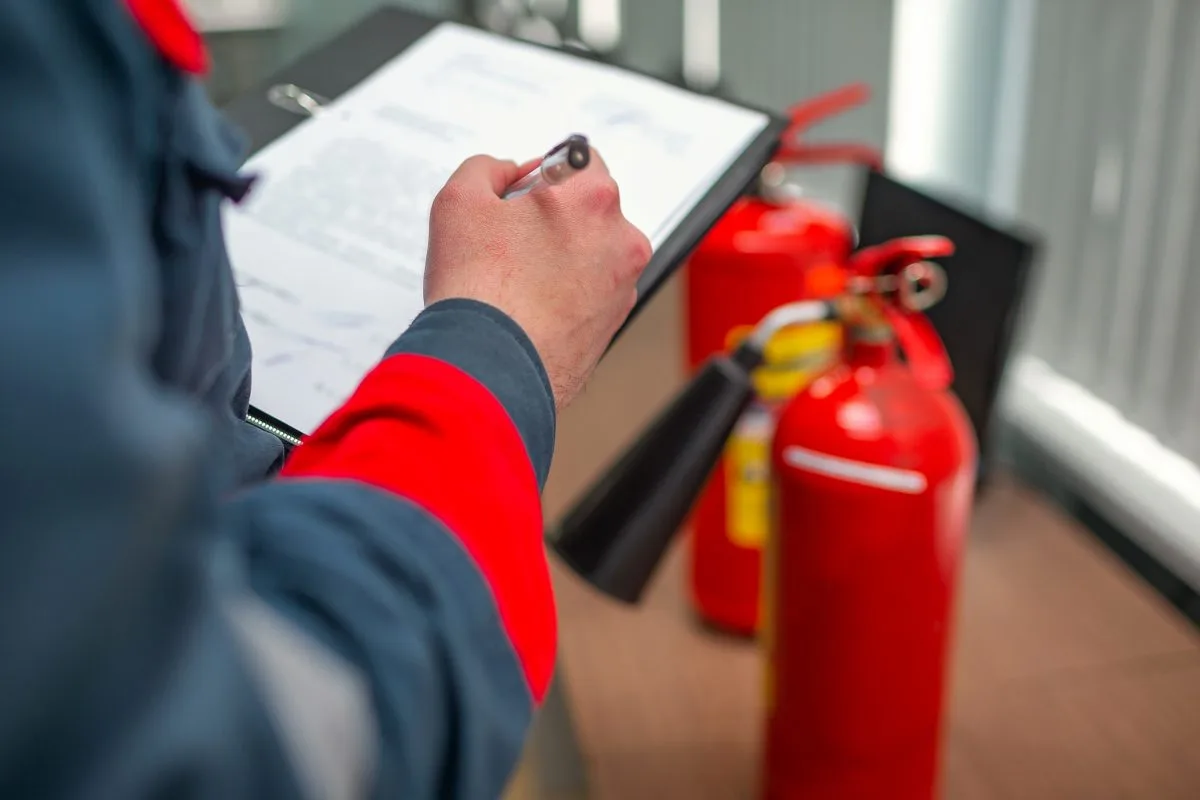
In a shared office building where several companies share facilities (kitchens, meeting rooms, and corridors, etc.) who has the responsibility for fire safety policies and procedures?
In shared premises, responsibility is generally shared between the landlord and the tenants. The landlord is generally responsible for the shared areas – safe corridors, stairwells, lifts, building infrastructure, fixed electrical wiring, gas safety, etc. They are also responsible for fire safety such as fire alarms, sprinkler systems, emergency lighting, exit signs.
Individual companies (the tenants) must carry out their own fire risk assessments for their areas, as well as maintain a safe working environment, testing and maintain all portable equipment (PAT testing) within their office, and provide safe furniture and equipment for staff.
Ensure your employees are fully trained to follow fire procedures, keep exits clear and report hazards. Employers must provide training, conduct drills, and ensure staff understand evacuation routes and assembly points. Remember to also train your employees to assist visitors.
Should I be recording health and safety near misses as part of my regular health and safety procedures?
Yes, absolutely. Although it is not a legal requirement, recording near misses is considered an example of best practice, and will give you valuable data insights into behaviours in your company. You can subsequently use this to update your policies accurately and appropriately.
A near miss is an incident that did not cause injury, illness, or damage, but could easily have done so if circumstances were slightly different. For example, a box falling near someone but not hitting them, a fire door being blocked but discovered before a fire, slipping on a wet floor but regaining balance, faulty electrical equipment found before use.
As you can see, recording near misses helps to recognise warning signs to prevent serious injury later. It helps to identify patterns or recurring hazards, which you can address. And it also helps to evidence proactive risk management and improve your company’s safety culture.
I have noticed more of my colleagues complaining about stiff backs and joints when they increasingly work from home. What should our employer be doing to support our physical welfare when we’re away from our main site?
Your employer should certainly be aware that there are risks that they need to assess if they are offering hybrid and remote working. The last few years has seen opportunities for this type of working increase and it is vital that your company’s health and safety duties remain adaptable and apply wherever the work takes place.
In short, it is your employer’s duty to undertake risk assessments and manage these risks even when employees are not on site. HSE guidance emphasises that risk assessments must explicitly cover home and hybrid settings, not just “office risks.”
The risk assessments should consider how people are working at home: home workstations may lack proper chairs, desks or adjustable monitors. Ergonomics and DSE are important considerations, and the risk of musculoskeletal disorders greatly increases if employers do not assess and support safe setups. This support should extend to providing education on how to properly set up workstations, tips on how to avoid musculoskeletal strains and sprains that can often develop from long periods working at a computer.
Employee mental health must also be factored in, alongside physical health. Blurred boundaries between work hours and personal time can erode rest breaks, leading to employee mental fatigue and stress injuries.
Also, employers should consider how they manage cybersecurity & IT equipment management. While primarily an IT risk, poor management of devices and access rights can indirectly affect safety (for example, if remote systems malfunction in safety-critical situations).
Please send any problems, issues or general enquiries about health, safety and wellbeing to [email protected] and their experts will respond in future issues.
Related posts


HSM Newsletter
HSM publishes a weekly eNewsletter, delivering a carefully chosen selection of the latest stories straight to your inbox.
Subscribe here