
Hidden danger
DUST EXPOSURE is one of the most common — and most underestimated — risks across industries. Effective monitoring, properly fitted respiratory protection, and robust safety practices are essential to protect workers from long-term respiratory harm, says Victoria Rivers.
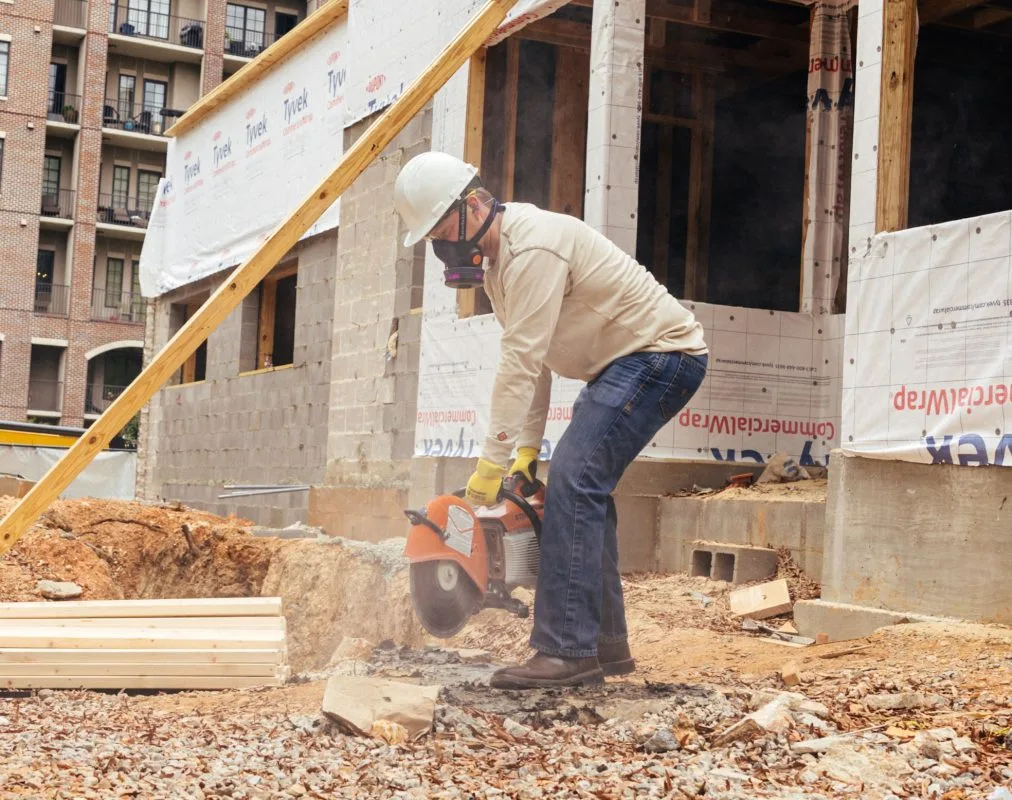
Dust exposure is one of the most common yet often underestimated hazards in workplaces across industries such as construction, manufacturing, engineering, warehousing, and agriculture. Dust can be generated whenever materials are cut, drilled, ground, sanded, mixed, or even moved during routine operations. While some dust particles are visible, the most hazardous types are fine or respirable, remaining suspended in the air and capable of being inhaled deeply into the lungs. Repeated exposure to these particles can lead to chronic respiratory diseases, reduced lung function, and other long-term health issues.
Workplace safety programmes now increasingly recognise that dust monitoring is essential for identifying exposure risks. However, monitoring alone does not eliminate the danger. When engineering and administrative controls are insufficient to maintain safe air quality, Respiratory Protective Equipment (RPE) is a critical safeguard. But RPE can only function effectively if it fits the wearer correctly, making fit testing an indispensable part of any respiratory protection program.
Understanding workplace dust
Workplace dust consists of fine solid particles created through a wide range of activities, including material handling, processing, and even the natural wear of surfaces and equipment. Dust can come from diverse sources, such as minerals, metals, wood, plastics, composites, powders, or agricultural materials. It may be generated during cutting, drilling, grinding, sanding, polishing, or mixing operations, and even foot traffic or vehicle movement can disturb settled dust, sending it back into the air.
A key concern is that dust exposure is not always limited to workers directly involved in dusty tasks. Because dust can settle on clothing, tools, and equipment, it can spread to adjacent work areas, rest spaces, and vehicles, creating secondary exposure risks. In some cases, workers may unknowingly carry dust outside of the workplace, extending potential health hazards beyond the immediate environment.
The hazards of dust
Dust is dangerous for several reasons, not just its composition but also its physical behaviour. Fine and respirable dust particles are often invisible, which makes them easy to inhale without noticing. Once inhaled, these tiny particles can bypass the body’s natural defences and penetrate deep into the lungs.
Over time, chronic exposure to airborne dust can contribute to serious respiratory problems. Workers may experience irritation of the nose, throat, and airways, coughing, wheezing, or shortness of breath. Prolonged exposure increases the risk of chronic respiratory conditions, including occupational asthma and chronic obstructive pulmonary disease (COPD). Some dust types can also have broader systemic effects, potentially impacting the immune system or other organs.
What makes dust particularly insidious is that many of these health effects develop gradually over the years. Symptoms may not appear until significant damage has occurred, emphasising the need for preventive measures and ongoing monitoring.
Dust monitoring
Effective dust management begins with monitoring, which provides objective data on exposure levels and helps employers understand where and how dust is being generated. Monitoring can take several forms, including personal sampling worn by workers, area or static monitoring to identify high-risk locations, and real-time monitoring for immediate feedback during tasks.
The data collected from dust monitoring not only informs risk assessments and control measures but also determines whether respiratory protection is necessary and what type is most appropriate. Regular monitoring allows organisations to evaluate whether existing control measures are effective and provides documented evidence of compliance with occupational health and safety standards.
Controlling dust exposure
Managing dust exposure effectively requires following the hierarchy of controls. Ideally, dust hazards should be eliminated or substituted where possible. If elimination is not feasible, engineering solutions such as local exhaust ventilation, enclosed processing, or dust suppression systems should be implemented. Administrative measures, including safe work practices, job rotation, and restricted access to high-exposure areas, can further reduce the risk.
However, in many real-world scenarios, dust cannot be fully controlled by these measures alone. In such cases, Respiratory Protective Equipment becomes essential. Selecting the right RPE depends on the type and concentration of dust, the duration of exposure, the work environment, and compatibility with other personal protective equipment. Comfort and usability also play an important role, as workers are less likely to wear equipment consistently if it is uncomfortable or cumbersome.
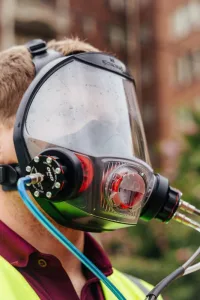
Respiratory Protective Equipment
RPE provides a critical barrier between workers and airborne dust, but its effectiveness
depends entirely on proper fit. Tight-fitting respirators rely on a secure seal between the face and the mask to prevent unfiltered air from entering. Any gaps or leaks can significantly reduce the protection, rendering the equipment ineffective.
Fit testing ensures that a specific respirator model and size fits an individual wearer correctly. It accounts for variations in facial structure, size, and other factors such as facial hair, scars, or dental changes. Fit testing is typically required before first use, when changing respirator types, and at regular intervals thereafter. It is also recommended after significant facial changes, such as weight fluctuations, to maintain effectiveness.
Without fit testing, workers may believe they are protected when in reality the respirator may allow dust to bypass the filter entirely. This risk underscores why fit testing is not merely a regulatory formality but a critical safety practice.
Fit testing technologies
Fit testing has evolved from subjective methods to advanced quantitative systems that provide objective, numerical results. Two widely used approaches are ambient particle counting (APC) and controlled negative pressure (CNP).
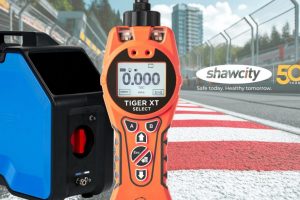
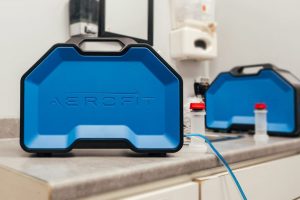
APC involves measuring the concentration of airborne particles inside and outside the respirator and calculating a fit factor. This method is highly accurate and provides immediate, quantitative feedback. Modern APC systems are designed for efficiency, with automated checks, simplified setup, and digital tracking of results, which reduces human error and improves reliability.
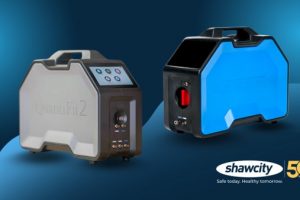
CNP, on the other hand, works by creating a controlled vacuum inside the respirator and monitoring for pressure changes to detect leaks. One major advantage of CNP is that it does not rely on ambient particles, making it suitable for use in a wide range of environments, including dusty or outdoor locations. Devices such as QuantiFit2 combine portability, battery operation, and guided instructions to provide accurate fit testing without the need for consumables, making it cost-effective and convenient for workplace programs. Both APC and CNP technologies offer objective data that ensures RPE provides the protection workers need, while also streamlining compliance and record-keeping for safety managers.
Workplace safety programmes
For a respiratory protection programme to be effective, fit testing must be integrated into a broader strategy that includes dust monitoring, RPE selection, training, and record-keeping. Monitoring data should guide decisions on when and what type of respirator is required. Fit testing must then confirm that the chosen RPE forms an effective seal for each worker.
Training is a key component of this integration. Workers need to understand the hazards of dust exposure, when respirators should be used, and how to wear, maintain, and store them correctly. Policies on facial hair, respirator compatibility, and proper inspection should be clearly communicated. Maintaining accurate records of fit test results linked to individual workers and respirator models ensures ongoing protection and demonstrates compliance with occupational health standards.
Engagement and compliance
Even the most sophisticated monitoring and fit testing programmes rely on active worker participation. Education and engagement are critical to ensuring that employees understand the importance of using RPE consistently and correctly. Workers should be empowered to report problems with respirators, such as discomfort, damage, or difficulty achieving a proper seal. This engagement not only enhances compliance but also strengthens the organisation’s overall safety culture.
Victoria Rivers is marketing executive at Shawcity. For more information, visit www.shawcity.co.uk
HSM Newsletter
HSM publishes a weekly eNewsletter, delivering a carefully chosen selection of the latest stories straight to your inbox.
Subscribe here