



Why construction sites are rethinking ‘general handling’ gloves
ON PAPER, many general handling gloves look fit for purpose – on site, they often fail fast.
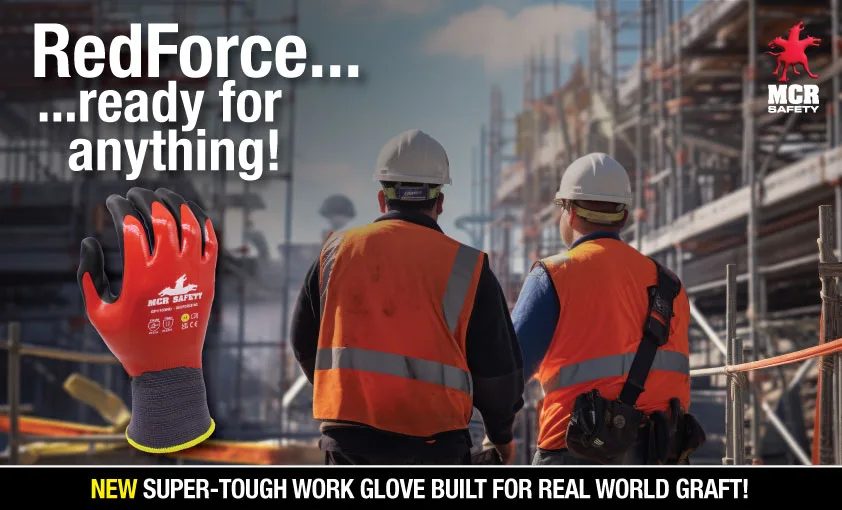
Groundworks and construction environments are uniquely punishing: abrasive materials, uneven surfaces, constant friction and repeated material handling all combine to destroy standard gloves far earlier than expected. For safety officers and buyers, this leads to a familiar cycle – frequent replacements, rising costs, and frustrated workers removing gloves that no longer perform.
A growing number of teams are now reassessing what ‘general handling’ really means in high wear construction settings.
Durability has become a safety issue
When gloves break down, grip is lost. When grip is lost, risk increases.
Tasks such as handling block work, aggregate, timber, rebar and shuttering demand gloves that can withstand continuous abrasion, not just occasional contact. That’s why abrasion resistance under EN388 testing has become a key decision factor for many safety professionals — particularly on civil engineering and groundwork projects.
Newer glove designs are now focusing less on minimal weight and more on controlled toughness, striking a balance between durability, grip and wearer comfort.
A more robust approach to general handling
One example is RedForce, a new general handling glove developed by the expert technologists at MCR Safety specifically for construction and groundworks rather than light industrial use.
Instead of a single coating, RedForce uses a dual layer nitrile system:
- a smooth inner layer to resist mud, oil and moisture
- a heavy-duty textured outer layer designed to maintain grip on rough and abrasive materials
The result is a glove that stays intact longer when exposed to brickwork, rubble, timber and rebar – environments that traditionally destroy standard nitrile gloves well before the end of a shift.
Performance without fatigue
Durability alone isn’t enough. Gloves still need to be worn.
Despite its heavy-duty focus, RedForce is built on a lightweight 13 gauge liner, keeping the glove flexible and breathable for all-day use. This is particularly important for tasks where dexterity still matters – tying rebar, handling fixings, operating tools or interacting with digital site plans.
Additional features such as wet and oily grip performance, touchscreen compatibility, and contact heat resistance up to 100°C (15 seconds) reflect how modern construction sites actually operate.
Reducing consumption, not just protecting hands
For corporate buyers and PPE distributors, glove selection increasingly goes beyond unit price. Service life, consistency of performance and worker acceptance all influence total cost of ownership.
In high wear environments, tougher gloves can help:
- reduce glove changeouts
- minimise downtime
- support safer, more controlled handling
- improve compliance by staying comfortable longer
That’s the shift now taking place across construction PPE – fewer compromises, and products designed around real site conditions, not lab assumptions.
A workhorse for modern construction
General handling gloves haven’t disappeared from construction – but expectations have changed.
Products like RedForce reflect a broader industry move towards purpose built durability, where gloves are expected to survive groundworks, not just light handling. For safety professionals looking to cut waste while maintaining protection, that change is long overdue.
Find out more about RedForce:
For organisations that won’t compromise on safety or productivity, RedForce stands out as a compelling solution. To find out how it performs in real world conditions, contact the MCR Safety team and arrange a trial for your workforce.
T: +44 (0) 333 070 7883
[email protected]
www.mcrsafetyeurope.com


HSM Newsletter
HSM publishes a weekly eNewsletter, delivering a carefully chosen selection of the latest stories straight to your inbox.
Subscribe here