

In the spotlight with Ian Cooke
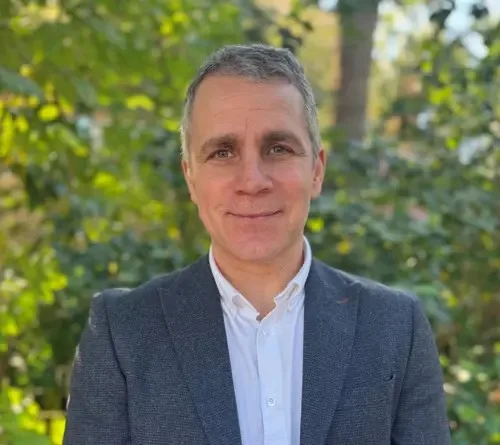
THIS MONTH we put Ian Cooke in the spotlight to find out how he got into the health and safety industry and how he is settling into his new role at the British Safety Council.
How did you get into the health and safety industry?
At heart I’m a bit of a scientist and I see health and safety as the science of people at work. I had a role at NEBOSH early in my career, which gave me an opportunity to travel the UK and Ireland, and I met so many passionate health and safety and environmental professionals. It really gave me an insight into what was going on and the level of competence. Basically, I made the choice early that this was a career that could give back so much.
What do you enjoy most about your job?
In a nutshell, I love the vision that British Safety Council has, that no one should be injured or made ill through their work.
Health, safety and wellbeing is such a broad field, which means so much to people and organisations. It touches on so many areas of what happens in a business. And being able to really understand how businesses large and small operate – and to help them to keep their employees safe and healthy – that’s what I find fascinating and so rewarding.
What do you think are the biggest challenges facing the health and safety industry in UK?
There’s obviously a range of challenges that we all have to continue to overcome – from recognising that people are still dying at work, through to budgets being cut at a regulatory level but also for HSW teams within organisations.
A key focus for me this year is the disruptive events that businesses face at the moment, in a volatile, ever-changing, almost chaotic world.
It can be difficult for businesses to plan, so it’s important to keep a focus on how businesses build-in resilience in terms of their organisational management systems – and subsequently what impact these have on workers and how businesses can better support their employees through difficult times.
How do you think these challenges can be overcome?
Well, we like to look at the climate and the culture within an organisation, and in particular the interaction of the people with the organisation’s system.
At British Safety Council, we believe that positive culture is the foundation of a successful business, and so by examining company culture and climate we can work with leaders to create a thriving workplace where employees feel engaged, supported, and aligned with business goals.
But more than that, British Safety Council facilitates and promotes best practice in Britain and overseas. We have a range of services and products, including training, qualifications, publications, audits and awards, which we use to leverage cooperation right across our sectors and we use our unique position to ensure that health, safety and wellbeing is represented at a governmental level too.
What sets British Safety Council apart from its competitors?
I think the main things that set us apart are how we listen to, and work closely with, our members and customers. For example, our audit and consultancy services are internationally recognised and are the most effective way to ensure an organisation’s safety, health, wellbeing and environmental management systems reflect relevant legislative requirements, meet recognised international standards, work toward best practice techniques and are being effectively implemented. But it’s much more than that to us – we don’t just work to a standard or a compliance checklist, we take time to listen to the specific requirements of each business we work with and help to guide them towards ‘best in class’.
For example, we understand that contractor management can be approached differently across different industries and businesses. Their application might be different, but the expectations and best practices can be shared and therefore benchmarked. So British Safety Council is in a great position to inform, educate and share international best practices with our customers and members.
What’s next in the pipeline for British Safety Council?
Being so new into my role, I will continue to spend time listening to our members and customers. All the changes and improvements I make will be as a direct result of those conversations. One of my key measures of success is having products that truly reflect the needs of different organisations, which can be flexed to meet different requirements. We could easily have two customers in the same industry, but actually their risk profile is different. So, we need to ensure that we can support them both, that our products continue to reflect the true operational risk our customers face.
I think one of the best things about health and safety is the transparency with how we work and how we share knowledge. So, I am keen to evolve our knowledge sharing capabilities and drive ever higher standards across health, safety, wellbeing and environment.
What’s your vision for the future of British Safety Council?
British Safety Council has, for nearly seventy years, been a trusted guide to excellent health, safety, wellbeing and environmental management. Firstly, we will continue to tirelessly protect workers from accidents, hazards and unsafe conditions, and play a decisive role in the political process around safety legislation in the UK.
I am honestly very privileged to have the role that I have and to be working at British Safety Council. This year, my first, is about getting to know our customers more, getting to understand them and what their needs are. And I’m really excited this year that we have plans to review our audit products, which is great timing for me to come in and be part of that.
We will continue to look at the international market, develop networks and relationships overseas and continue to help individuals and organisations worldwide strengthen their knowledge, develop their skills, and build safer, healthier workplaces. I’m really looking forward to meeting our customers to get feedback which will further enhance our audit products this year. I’m really excited about what that will bring.
What do you think the medium-term future holds for the safety industry globally?
For me it will be more about people. How we support people in an ever-changing world: how do we keep workers safe, healthy, and happy during such constant and often seismic change?
We need to consider how the decisions we take today will pave the way for the safer, healthier, and happier workplaces of the future? No sector will be immune from the impacts of AI: if it doesn’t already, AI may soon play a part in every decision, from mergers and acquisitions to the sending of an email or the scheduling of a meeting.
The future of work must be built on shared values that put human health, safety, and wellbeing first, and we must remain vigilant against potential risks and misuse. By doing so, we can harness the benefits of AI while mitigating its dangers.
How can we entice more young talent to work in the health and safety sector?
Attracting people from all kinds of backgrounds into the sector, including younger people, is vital given the ageing demographic working in health and safety roles. It is incumbent on all of us to ensure that we reach out to a broad a range of people when we advertise roles, but more than that we need to make sure young people and others know about the fantastic opportunities that exist in our sector. What we do makes such a difference and saves lives, and in a world of such volatility and disruption we need that more than ever.
Ian Cooke is the audit, consultancy and culture change director at British Safety Council (BSC). For more information, visit www.britsafe.org
Related posts

HSM Newsletter
HSM publishes a weekly eNewsletter, delivering a carefully chosen selection of the latest stories straight to your inbox.
Subscribe here