

Responsible AI adoption is a balancing act
AS ARTIFICIAL intelligence (AI) transforms the way organisations identify and manage risk, EHS professionals face a critical balancing act: harnessing powerful new tools while upholding their fundamental responsibility to protect people. Navigating this intersection of innovation, accountability and safety is fast becoming a defining challenge for the profession. Mike Swain provides an insight.
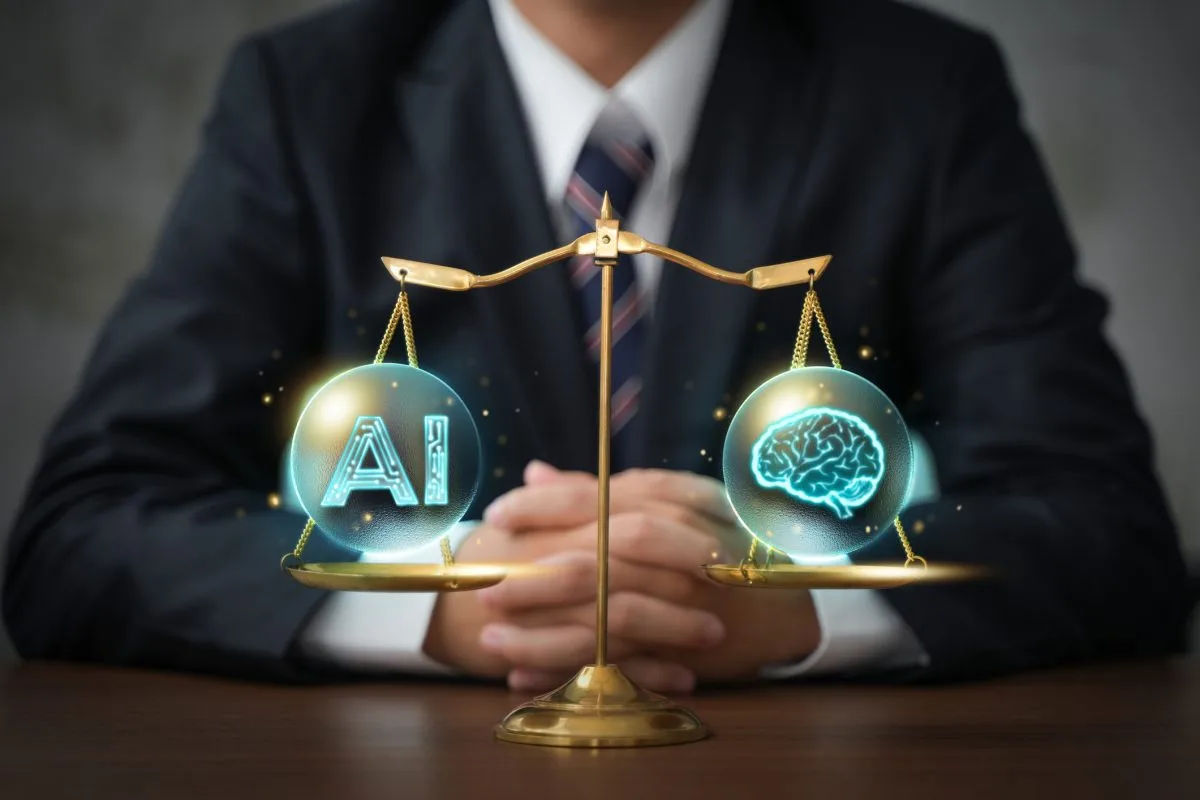
EHS teams are used to balancing priorities—productivity with efficiency, speed with diligence. But the core mission of maintaining safe workplaces never changes. AI is reshaping how organisations pursue this goal, offering new ways to predict, prevent and respond to risk. The challenge is to embrace innovation without losing sight of responsibility.
Balancing the promise of AI with the realities of health and safety is the next evolution of the job.
AI is writing a new playbook
There’s a lot of noise out there, but AI has the potential to support a long list of initiatives. The biggest opportunities and the most practical use cases for AI in EHS today include predictive analytics to strengthen prevention and image recognition and natural language processing (NLP) to bring new precision to inspections, reporting and compliance.
Incident Reporting & Classification
AI can help safety teams capture and categorise incidents more consistently. By analysing written reports or spoken descriptions, it can detect patterns, suggest categories and highlight missing information.
Hazard Spotting & Image Recognition
Computer vision is defining new ways to detect risks that might otherwise go unnoticed. Scanning photos from inspections or job sites can help flag missing PPE, poor housekeeping and potentially unsafe conditions.
Auditing & Inspections
Instead of spending hours consolidating findings, AI can be used to identify recurring issues, summarise findings and suggest next steps.
Predictive Analytics & Horizon Scanning
By connecting information across incidents, audits, inspections and near misses from multiple sites, AI can detect patterns that point to emerging risks.
Smart Sensors & Connected Safety
Sensors across equipment and sites collect thousands of data points. AI can help interpret these signals by flagging anomalies, triggering alerts and supporting real-time decisions.
Hazardous Environments Robotics
AI-powered robotics can step in where humans shouldn’t. It can perform inspections in confined spaces or post-incident zones, keeping humans out of danger while delivering visibility and control.
AI examples in high-risk environments
In high-risk industries, AI is making an impact. In energy and utilities, for example, AI continuously monitors infrastructure such as pipelines and grids to detect early signs of wear, corrosion or system irregularities and suggests maintenance before failures occur. Manufacturers use AI-enhanced tools to empower frontline workers to improve the quality and accuracy of reported information with image-based hazard identification, real-time translation and best practice guidance.
Construction companies rely on computer vision technology for real-time hazard detection. NLP tools help EHS teams in the oil and gas industry automatically analyse and extract critical insights from complex regulatory documents, industry standards and audit reports. These systems can find key insights from massive amounts of documentation, freeing up EHS teams to focus on implementation, rather than interpretation.
Balancing innovation with responsibility
The potential for AI to measurably reduce health and safety risk is undoubtedly high, but so are the stakes of getting it wrong. This is why any AI use should be considered with care. Responsible adoption includes stringent data privacy standards, transparent AI applications and clear guardrails that prevent poor AI decisions, like missing a key control or recommending an unsafe process. The essential guardrail is human input and approval.
One of the most important benefits to using AI in EHS is that it allows teams to concentrate on the human side of safety. With AI as your team’s copilot managing the mountain of admin work, leaders can step away from their desk to be visible in the business, talking with frontline workers and understanding conditions firsthand. When used in this way, AI isn’t replacing human judgment; it’s amplifying it.
Five steps to start using AI
Implementing AI in EHS shouldn’t mean a massive overhaul. Your best approach for responsible, successful adoption is to be razor-focused, start small and demonstrate value along the way.
- Assess your data foundation
AI is only as strong as the data it learns from. Before you launch any initiative, standardise your data formats and evaluate the overall quality. - Identify your right use cases
Look for repetitive, high-impact processes where AI can deliver measurable improvements. Examples include: near-miss reporting, compliance checks or anomaly detection. - Start small
Pilot one or two targeted AI use cases that align with your company’s core EHS goals. Demonstrate quick wins to build momentum and buy-in among stakeholders. - Set AI governance
Set clear parameters for how AI and your data will be used. Your framework should include data privacy standards, ethics and accuracy considerations. - Train your team
Address any hesitation early on by educating your team and frontline employees on how AI will support (not replace) their expertise.
Find well-balanced alignment
AI has the potential to revolutionise EHS management, but it can’t replace human judgment. Responsible adoption isn’t about how much AI you use or how fast you deploy it, but how you balance the technology with your mission to protect people.
Mike Swain is a chartered health and safety professional at Evotix.

HSM Newsletter
HSM publishes a weekly eNewsletter, delivering a carefully chosen selection of the latest stories straight to your inbox.
Subscribe here