


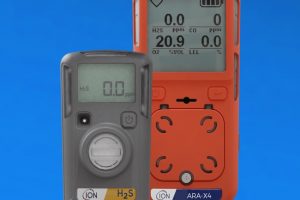
Ion Science meets objectives
In line with its 30% year-on-year growth objective, Cambridge-based Ion Science is celebrating 30 years by announcing it is on target to achieve £20 million turnover in 2019.
Increasing global awareness of the need to monitor volatile organic compounds (VOCs) for indoor and outdoor air quality continues to drive demand for the company’s high performance photoionisation detectors (PIDs).
Ion Science, which has subsidiary offices in France, Italy, Germany, India, China and the USA, is also reporting that April 2019 was a record month for the business with an unprecedented £1.3 million turnover, largely due to an order for 180 of its popular Tiger handheld instruments. The company has also benefitted from sales growth across Scandanavia and the Far East.
“There is no doubt that widening recognition of the damaging effects of VOCs on health and the environment continues to fuel our growth,” comments Ion Science Managing Director, Duncan Johns. “It means that more companies are seeking well-designed, robust and reliable gas detection instruments for ensuring the safety of employees and the wider community.
“As a technology led business, it is imperative we continue to move forward and push boundaries, which has been demonstrated by considerable investment in strategically located subsidiary offices in Europe and the Rest-of-the-World, as well as the expansion of our MiniPID sensor range, with a focus on indoor air quality applications.
“Despite being established for 30 years, we are proud that our philosophies, core values and vision are the same as ever, that we are committed to developing market leading, cost effective and efficient sensing devices for end users across the world.”
Ion Science comments that it was responsible for developing the world’s first truly field worthy and accurate PID detector, which was patented in 1998. In 2000, it launched the PhoCheck 5000EX which was its first PID instrument designed to detect VOCs down to ppb levels and a range of hydrosteel corrosion monitors that continue to be used primarily in petrochemical streams.
Responding to its growing experience of worldwide PID applications, the company took out a global patent on its advanced PID Fence Electrode technology in 2002, which enabled VOC measurement in contaminated, hot and humid atmospheres.
The serviceability and robustness of the PID using the Fence Electrode was enhanced by the in-house manufacture of a miniaturised PID (MiniPID), as incorporated in the Tiger series and other PID instruments.
In 2007, Ion Science acquired a mercury vapour detector (MVI) which is suited to chemical and petrochemical markets.
Since then, the company has dedicated considerable resources to selective PID measurements within the petrochemical industries, such as the Tiger Select.
Another key milestone for Ion Science was the move into a new state-of-the-art £4.5 million, 1500m² facility in autumn 2017. Located in the village of Fowlmere in Cambridgeshire, the head office building was designed to meet current and short-term needs, as well as reflect the on-going ambitions of the business. www.ionscience.com
HSM Newsletter
HSM publishes a weekly eNewsletter, delivering a carefully chosen selection of the latest stories straight to your inbox.
Subscribe here